In Conversation: On the Border of my Peaceful Home, 2025
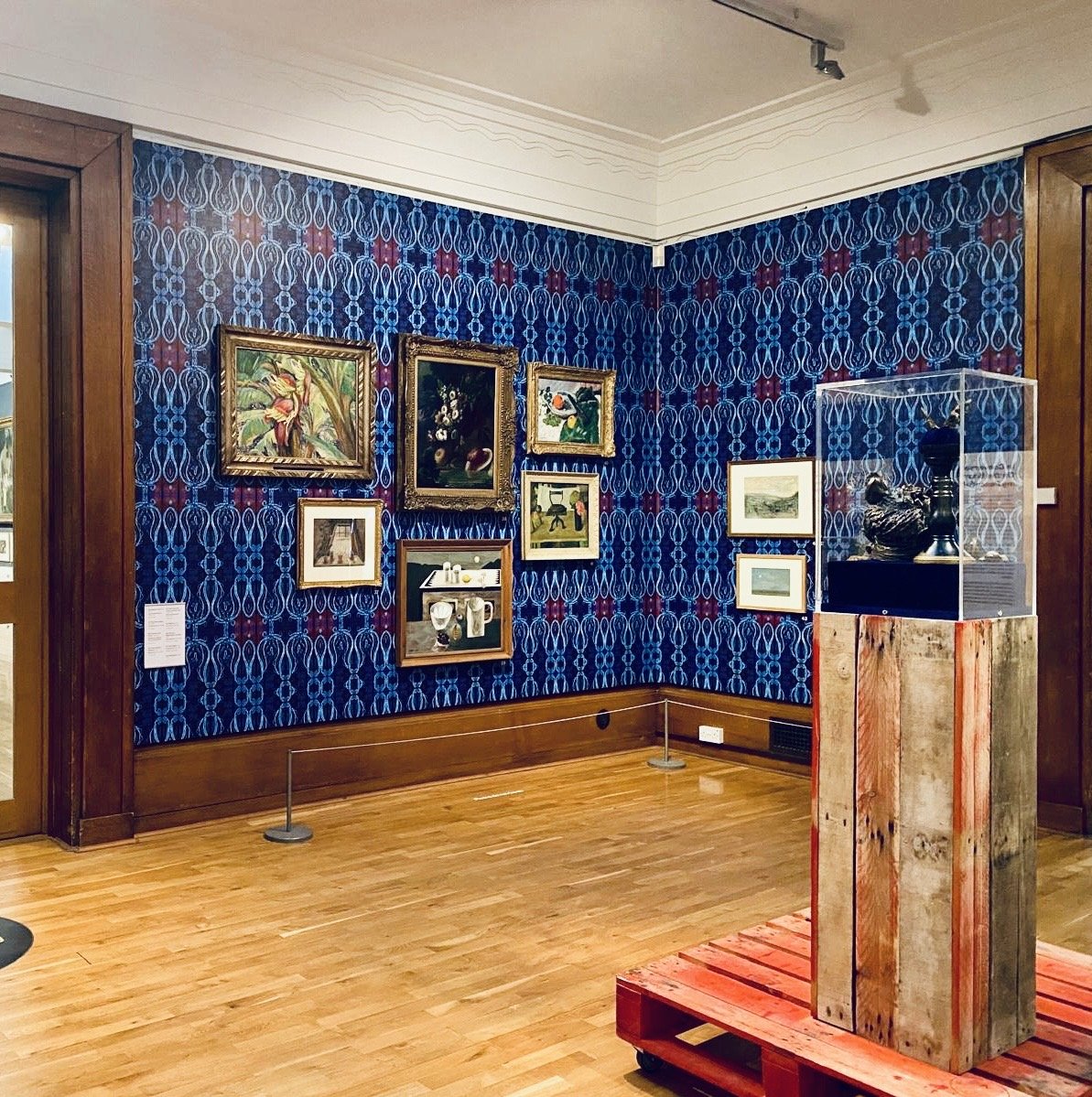
In Conversation: On the Border of my Peaceful Home, 2025. Curated by Kedisha Coakley.
The city’s collection curated to tell the extended stories inspired from my research into Dutch Flower paintings and botanical legacy.
No Place Like Heimat: Coat of Arms of the Diaspora 2024-2025
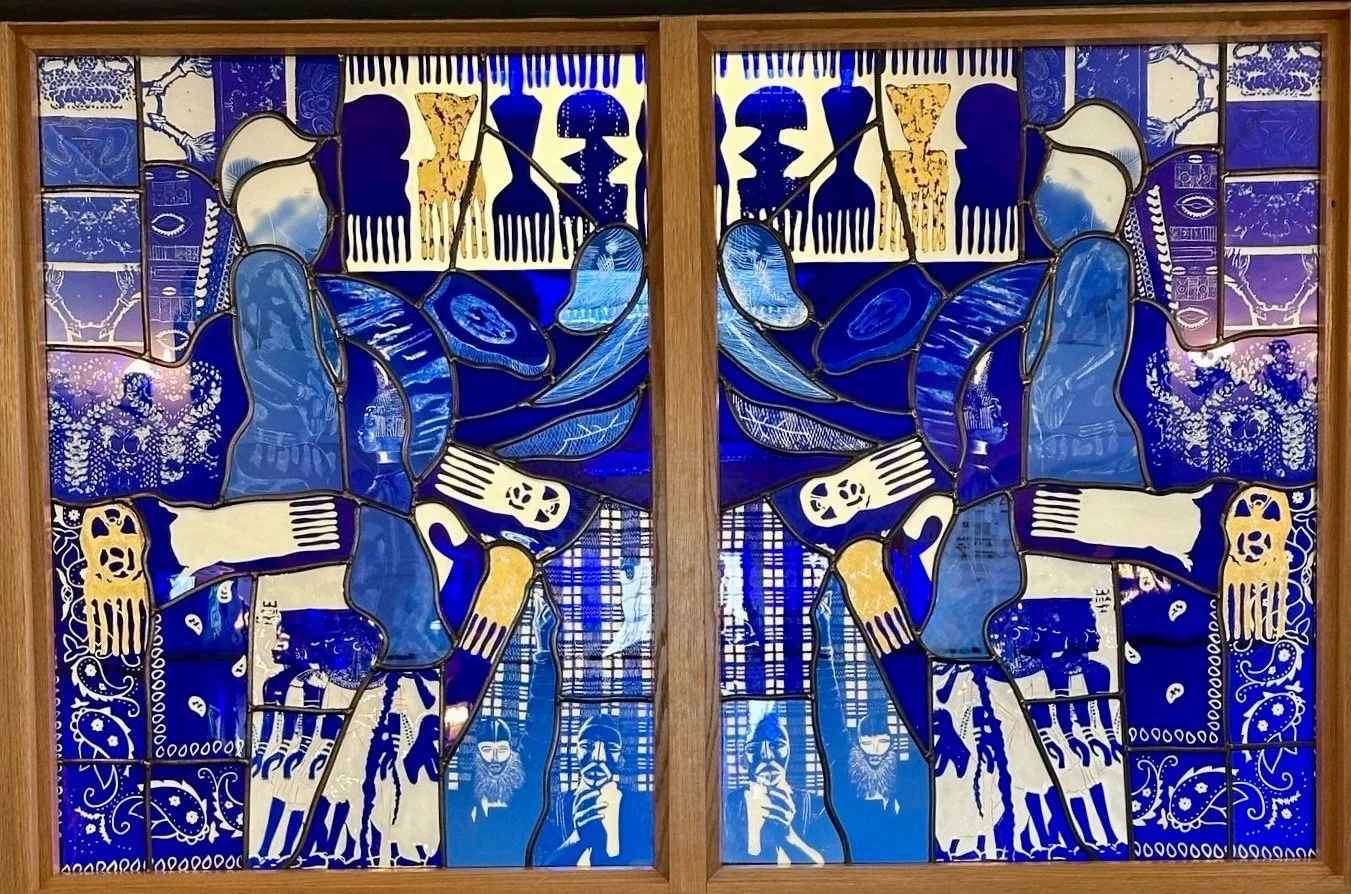
Commissioned by Loughborough University of Arts, RADAR programme (collaboration with Annahita Hessima of Cut Glass Studio Ltd).
Dimensions: 700(w) x 1000(h) mm each
This innovative stained-glass design reinterprets traditional Coat of Arms elements—Shield, Supporter, Crest, and Motto—through a contemporary lens, incorporating archival images, scanned textiles, and collagraph prints. The intricate blend of these mediums, paired with digital collages, is further transformed by the cyanotype printing process, creating a striking blue template that symbolizes a blueprint for future inclusion, visibility, and representation. This artistic approach not only honours historical traditions but also seeks to pave the way for a more diverse and equitable narrative, resonating with the themes of community and identity.
The experiences of Black, Brown, and other minority cultures at Loughborough University reflect a need for greater representation and acknowledgment within the institution's artistic and cultural expressions, particularly in the stained glass works of Hazelrigg and Rutland, which currently lack female representation and documented links to the legacy of Empire. This absence highlights the necessity to explore and confront the historical relationships between Europe and other cultures, fostering a broader dialogue that embraces the complexity of hybrid identities shaped by migration, displacement, and the fluidity of cultural boundaries. Through the interruption of traditional stained-glass narratives, a new space can be created—one that acknowledges the transformative power of art while recognizing the challenges and dislocations faced by individuals straddling multiple cultures and the notion of home.
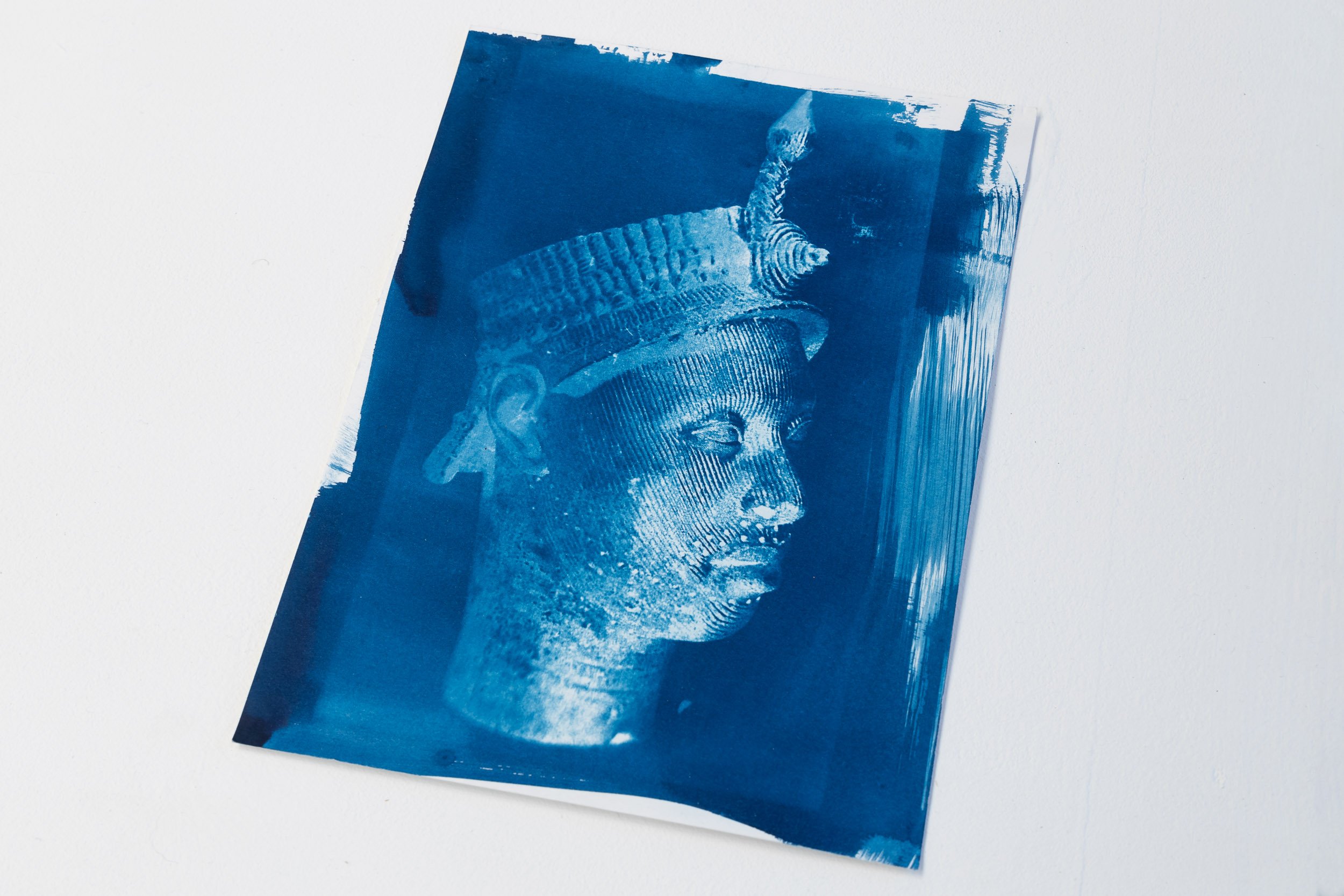
The Right of an Exile & Negritude No.11
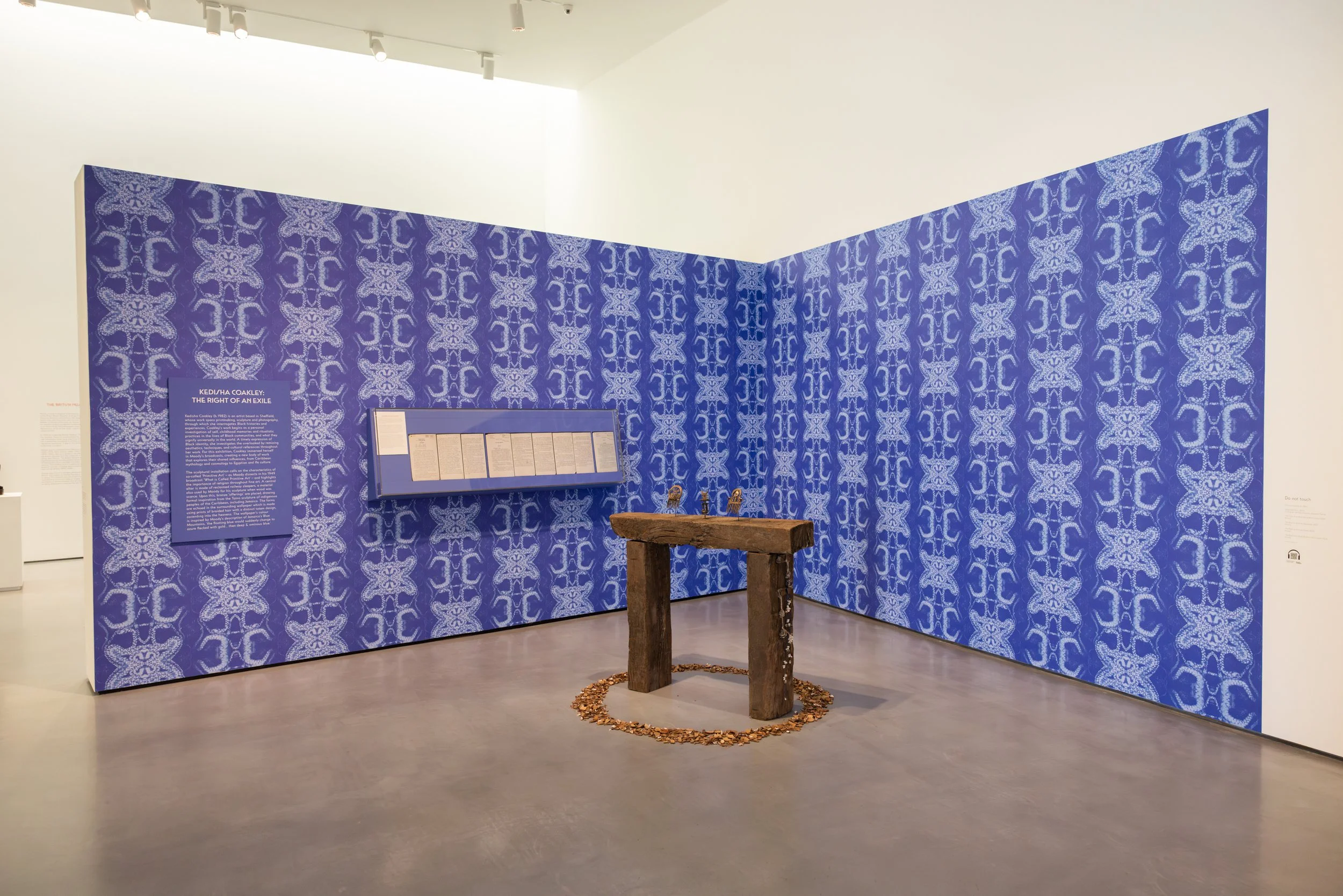
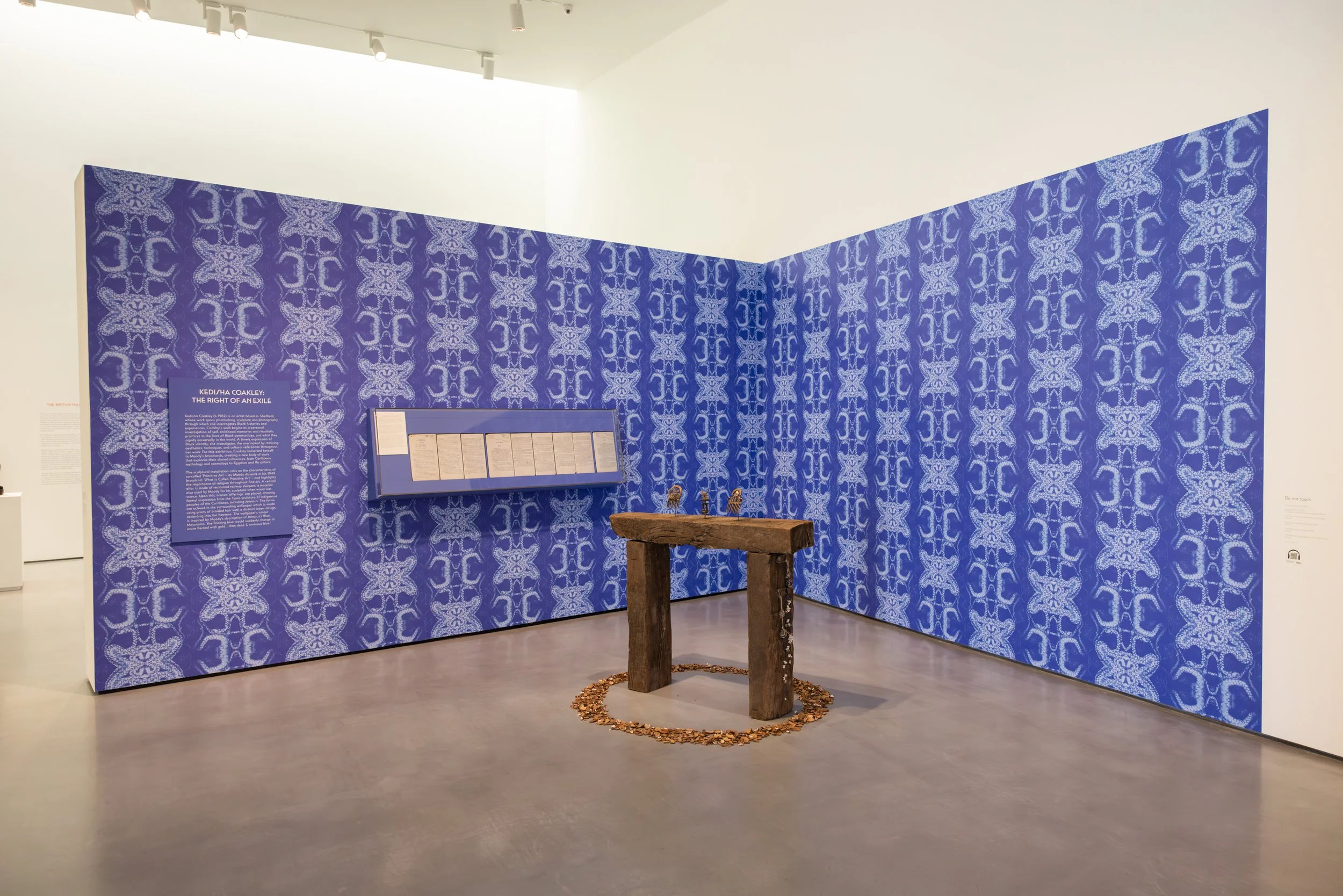
The Right of an Exile (installation). Wall covering, Negritude No.11
Commissioned by The Hepworth Wakefield, for the Ronald Moody: Sculpting Life exhibition.
For this exhibition, I immersed myself in Moody’s broadcasts, creating a new body of work that explores their shared influences, from Caribbean mythology and cosmology to Egyptian and Ife culture.
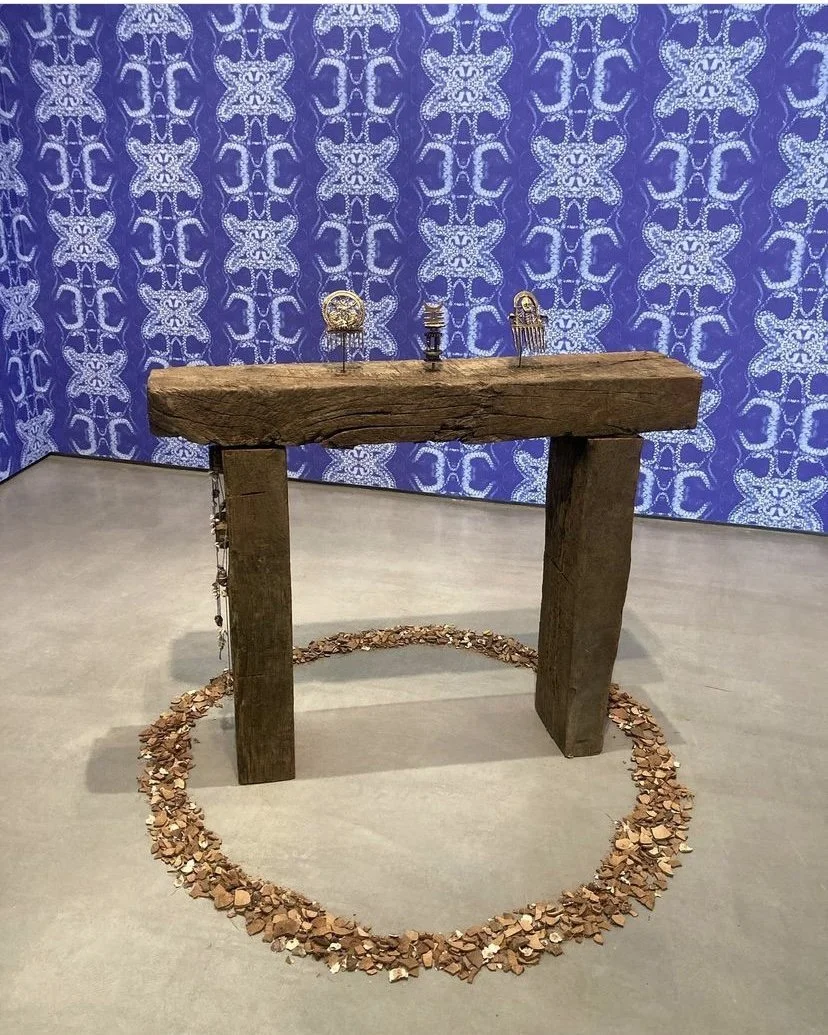
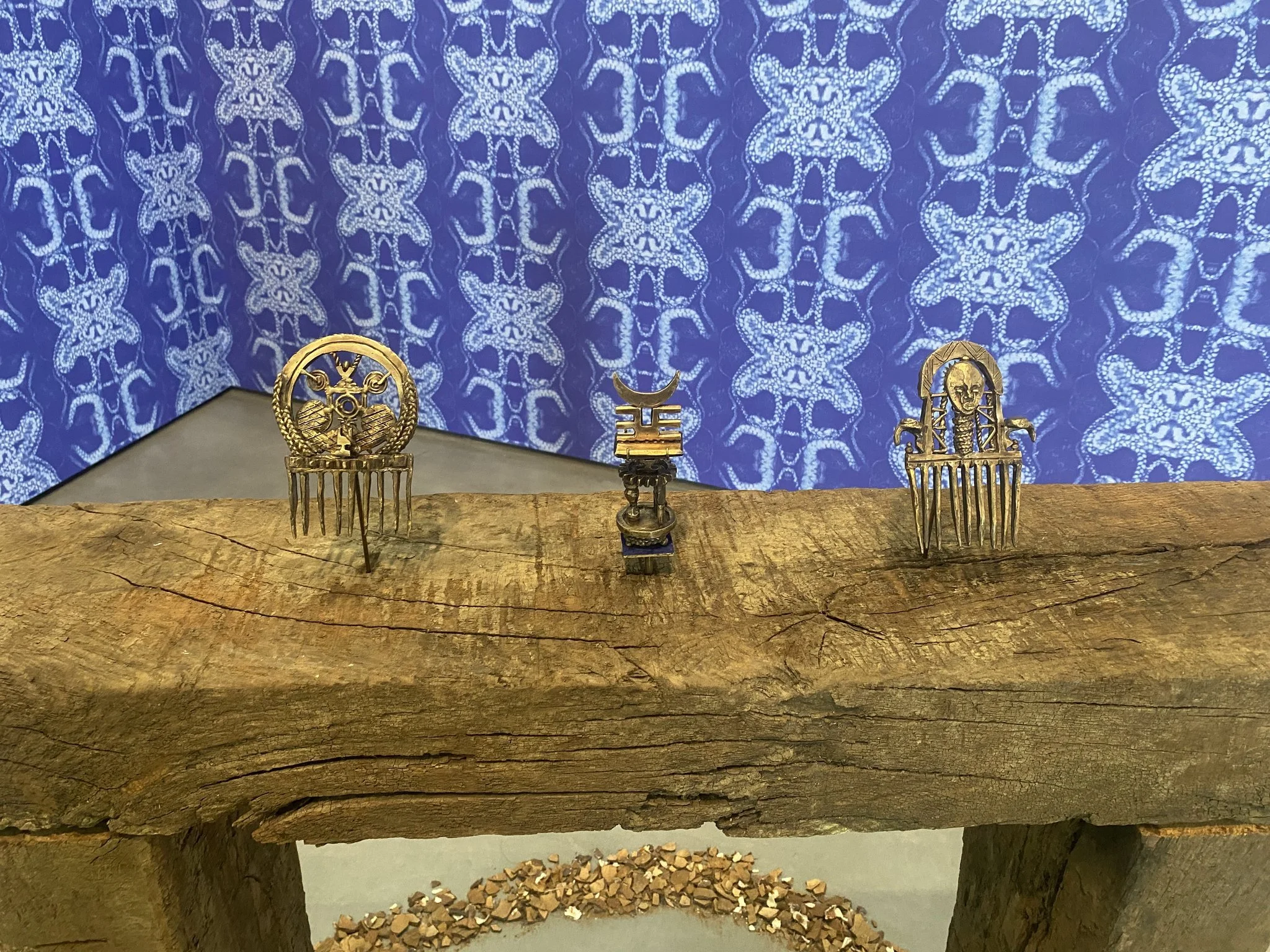
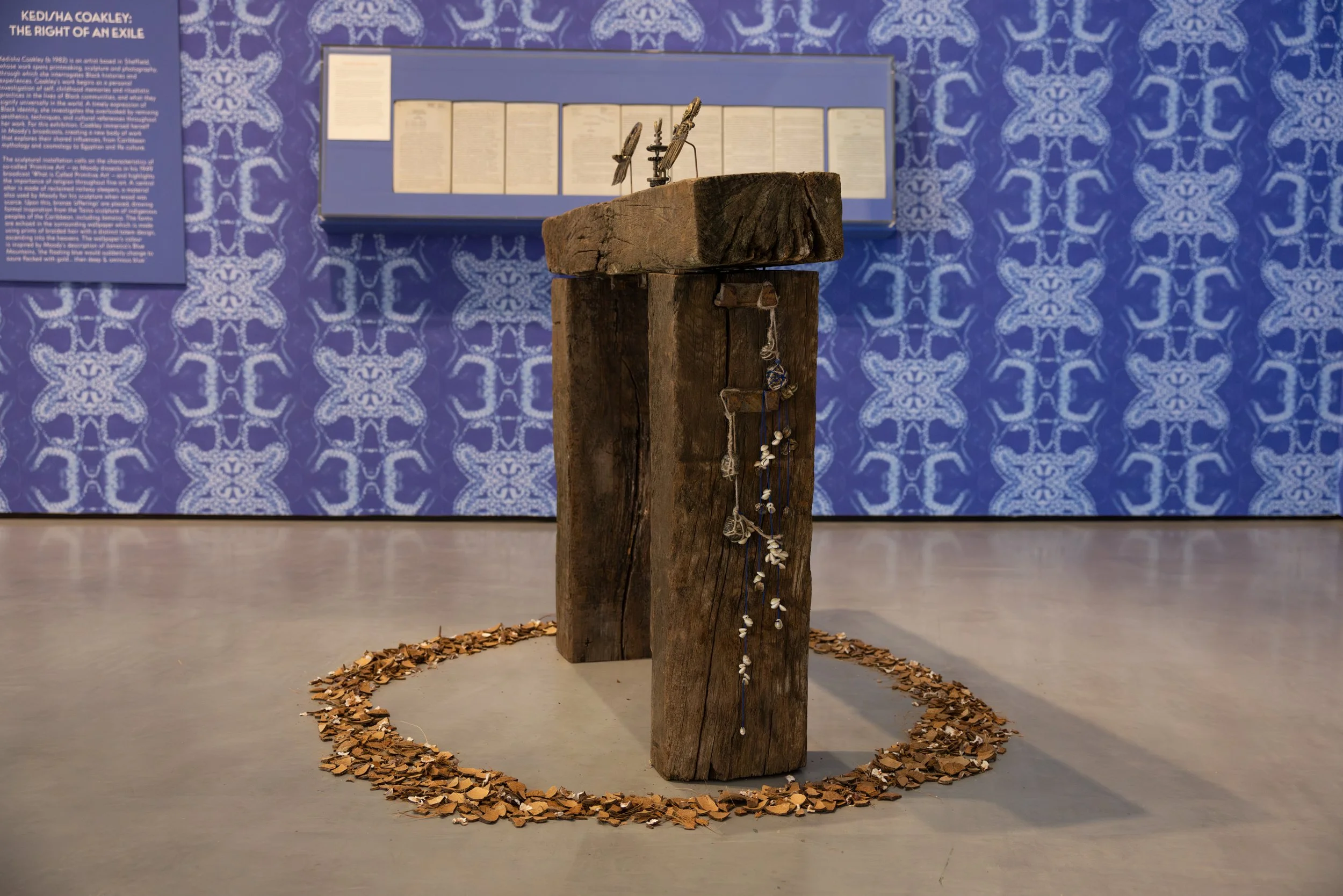
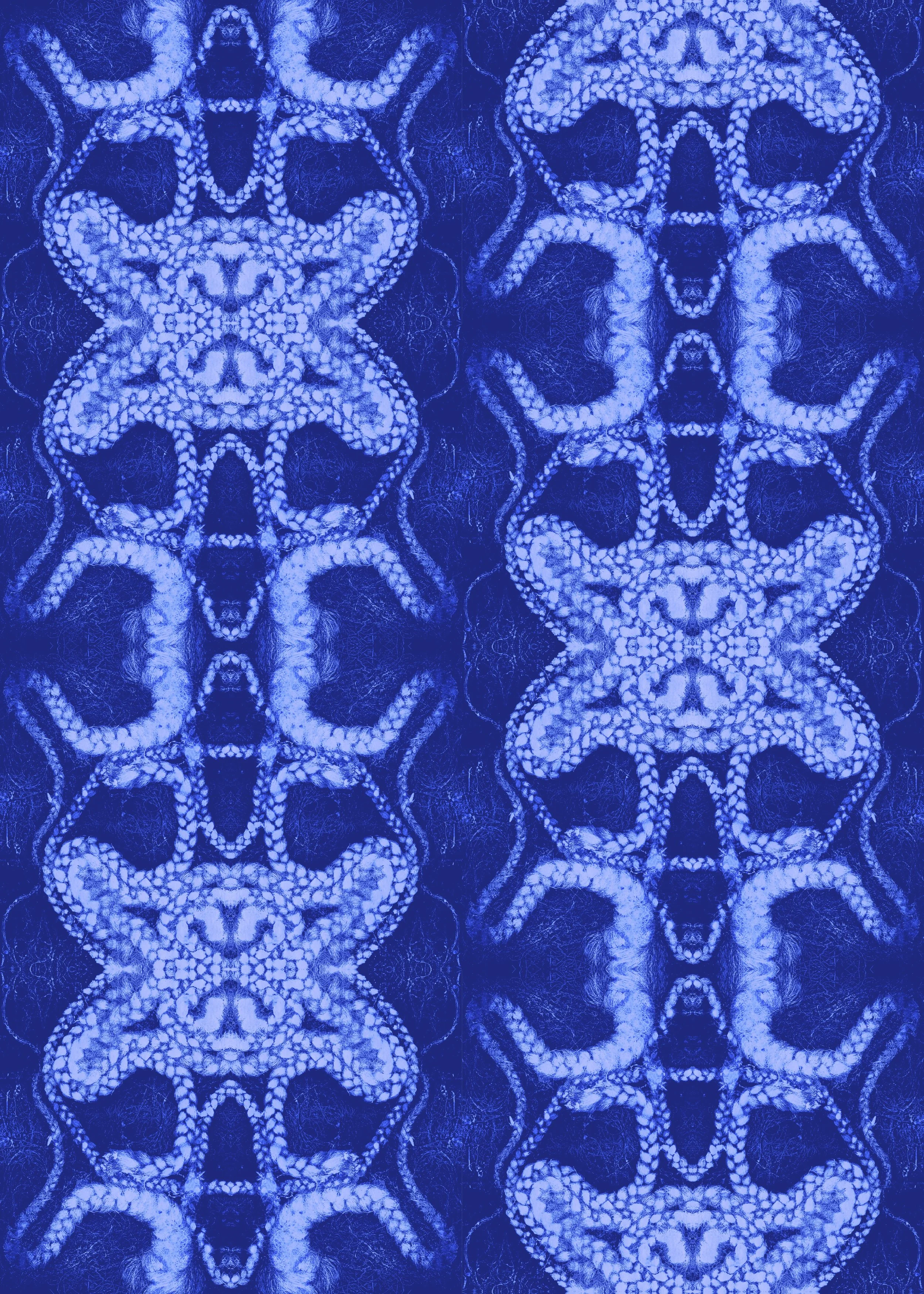
The sculptural installation calls on the characteristics of so-called ‘Primitive Art’ – as Moody dissects in his 1949 broadcast ‘What is Called Primitive Art’ - placing it in the centre of modernity, and highlighting the importance of religion throughout fine art. A central altar is made of reclaimed railway sleepers, a material also utilised by Moody for his sculpture when wood was scarce, on which bronze ‘offerings’ are placed, drawing formal inspiration from Taino sculpture indigenous peoples of the Caribbean including Jamaica . The forms are echoed in the design of the wallpaper, made using prints of braided hair, with distinct totem design, ascending into the heavens colour of which is inspired by Moody’s description of Jamaica’s Blue Mountains, ‘the floating blue would suddenly change to azure flecked with gold… then deep & ominous blue.’
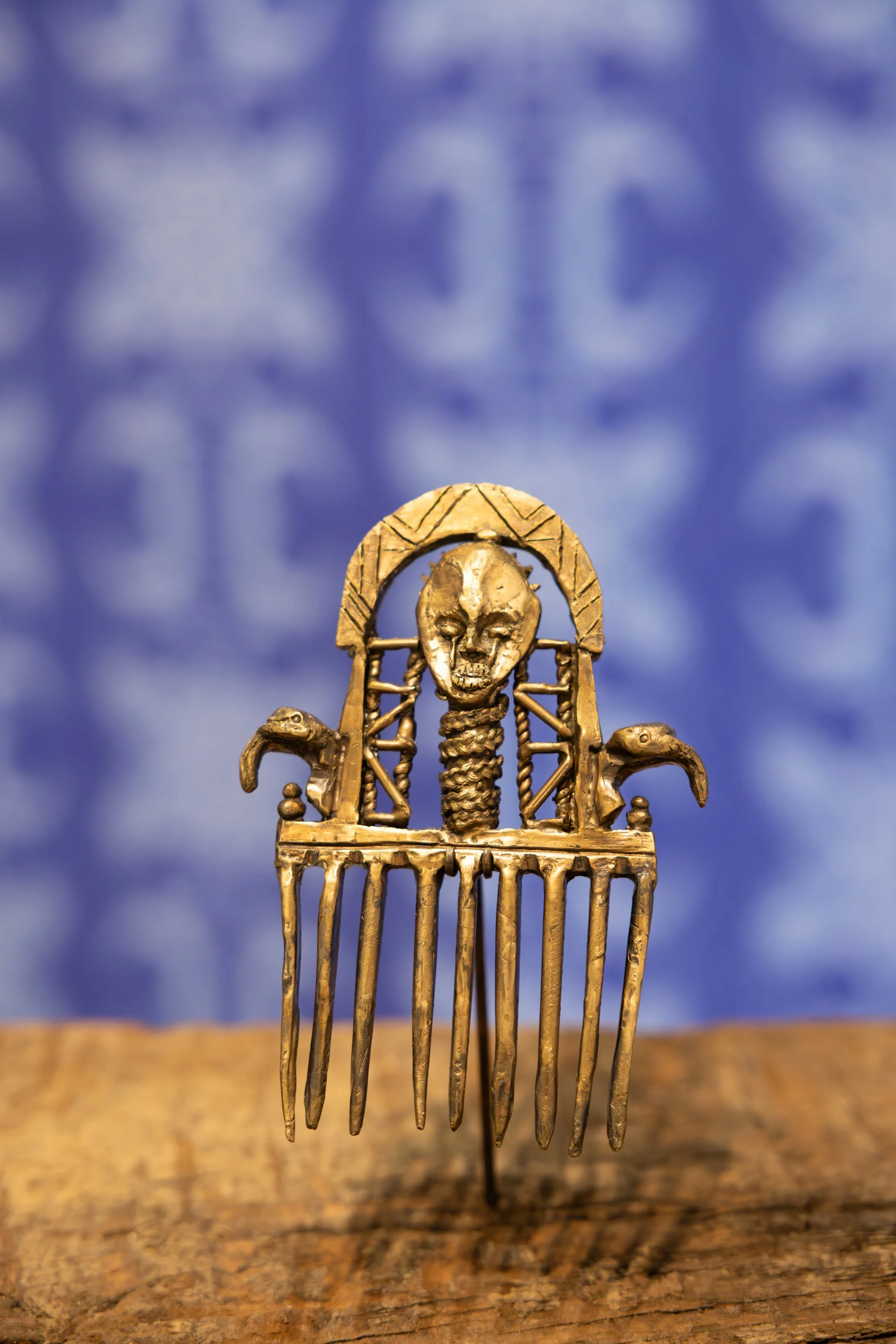
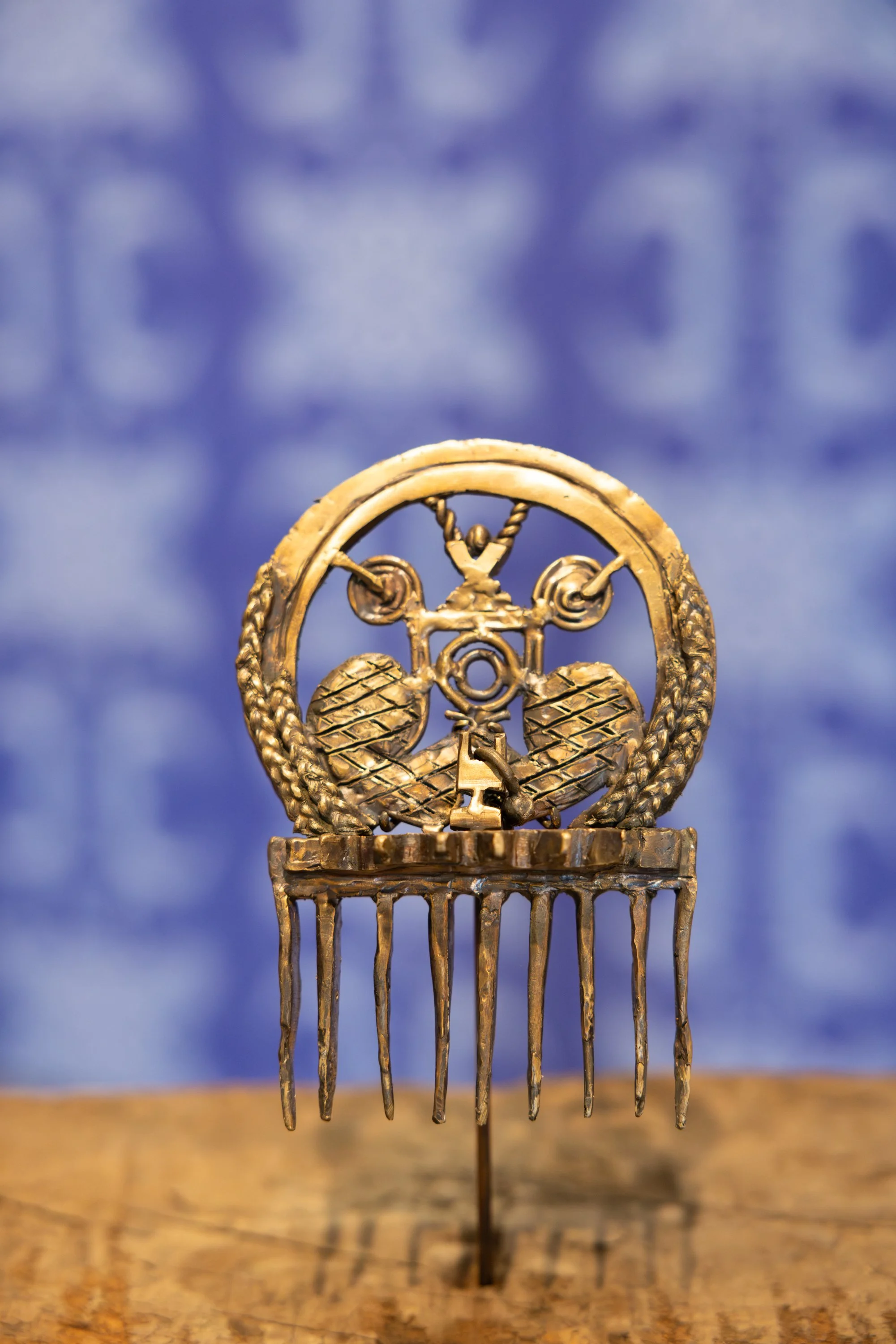
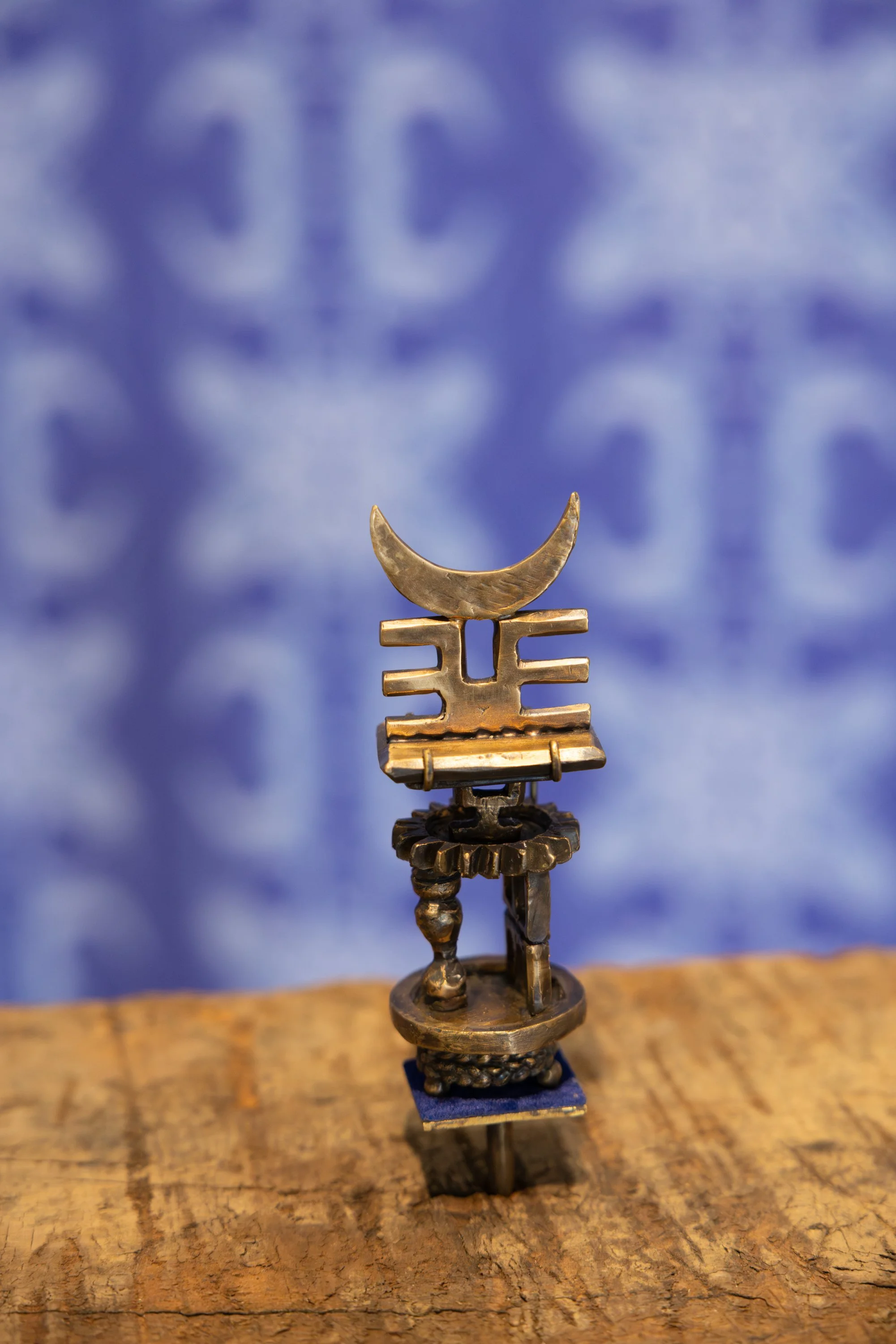
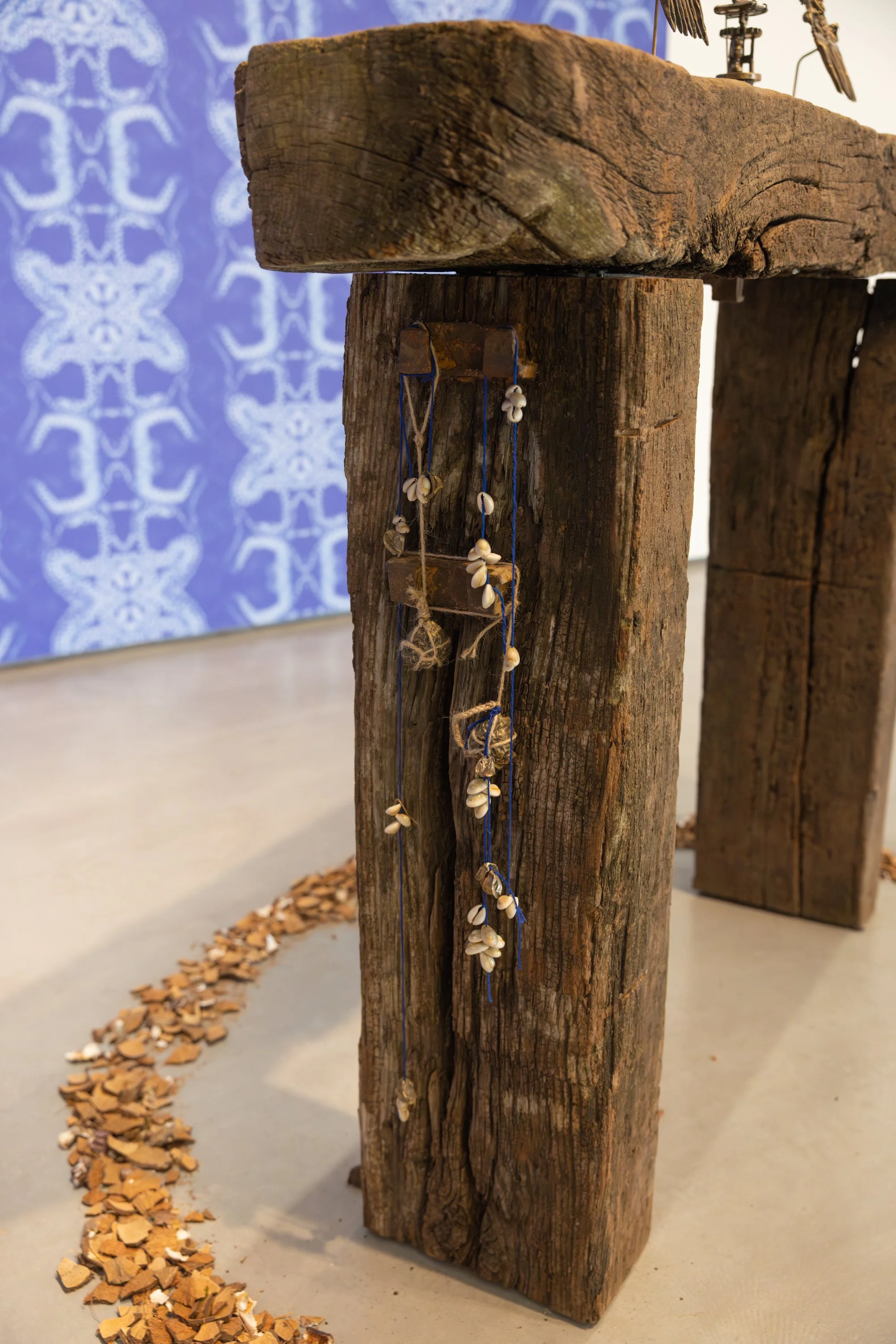
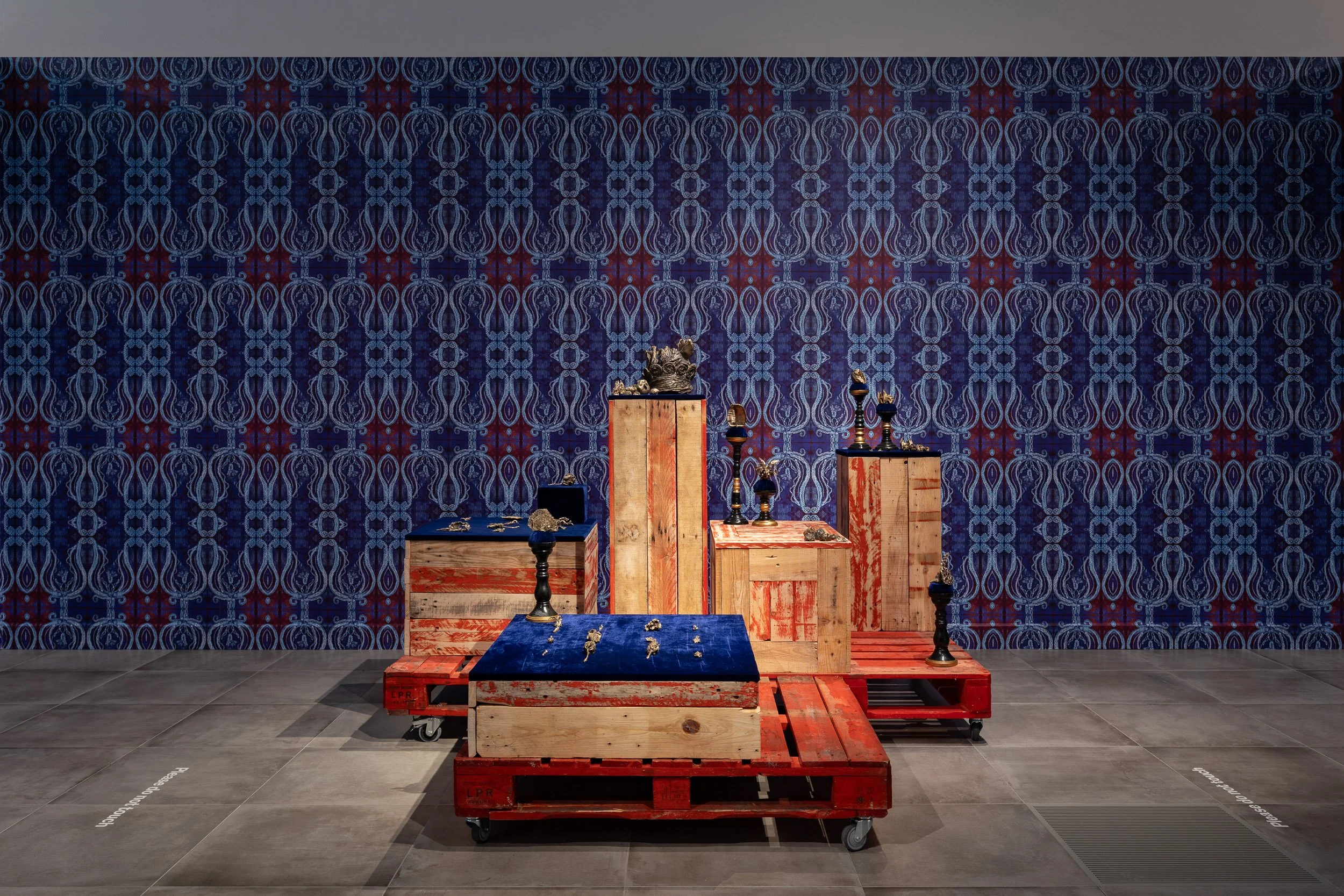
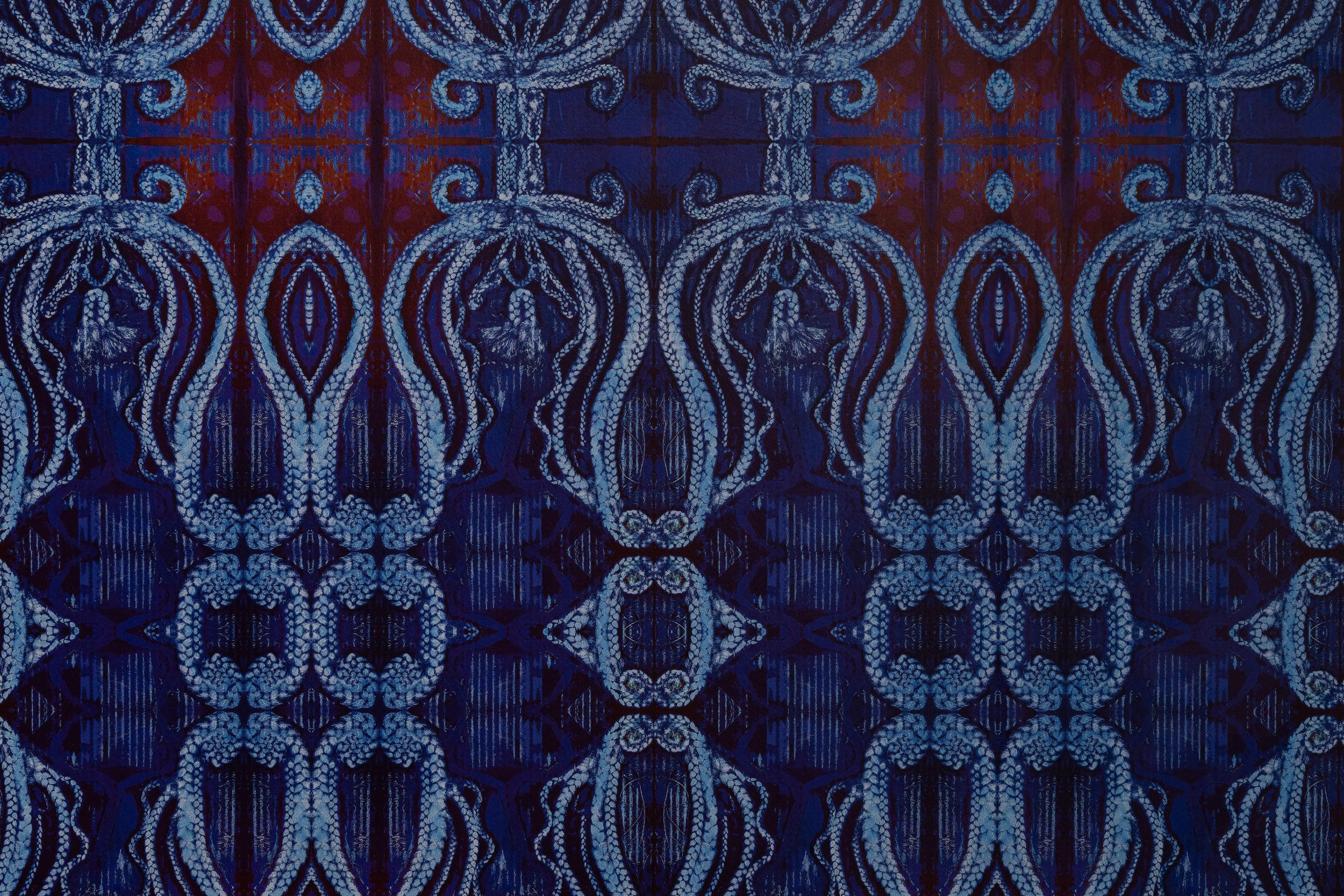
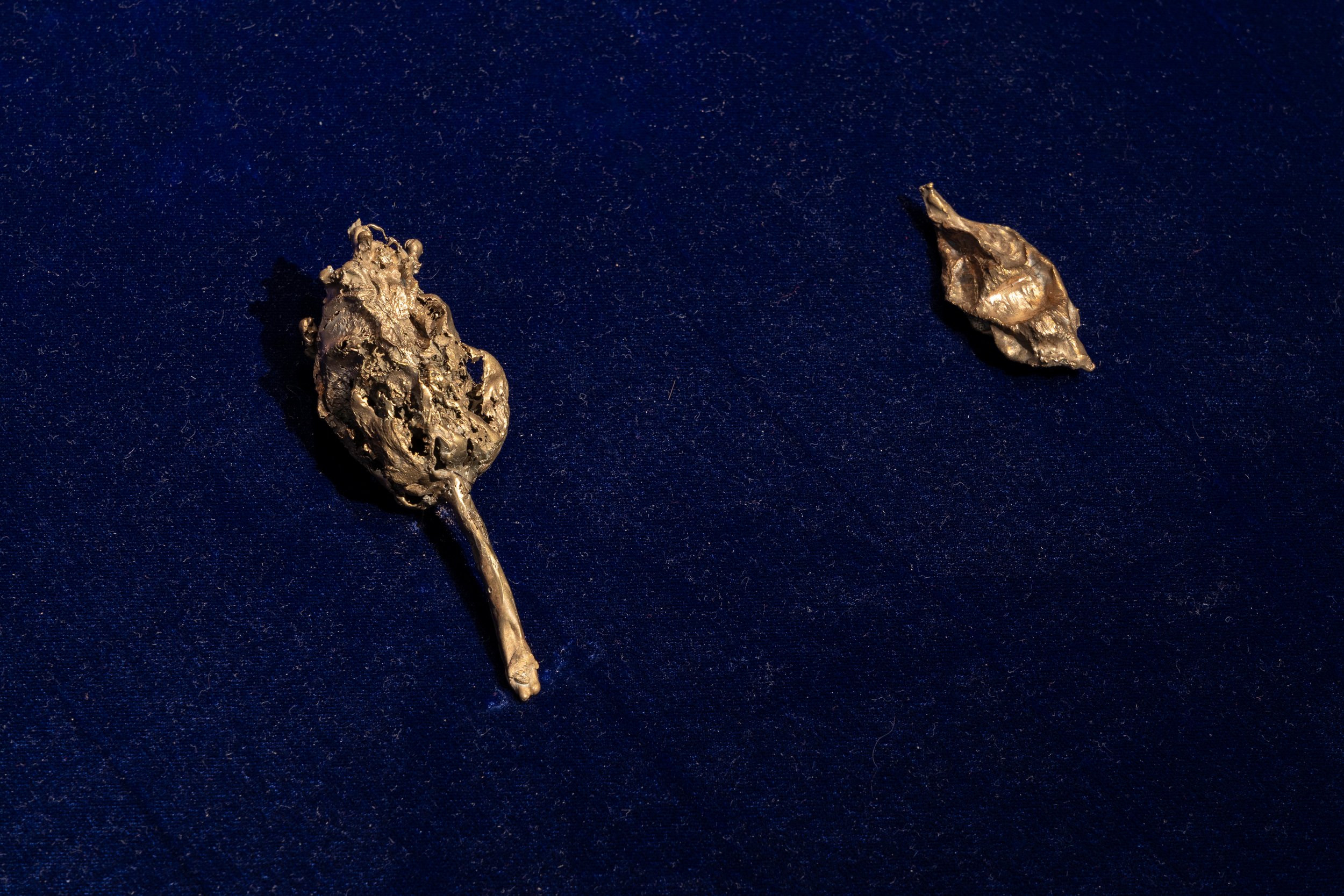
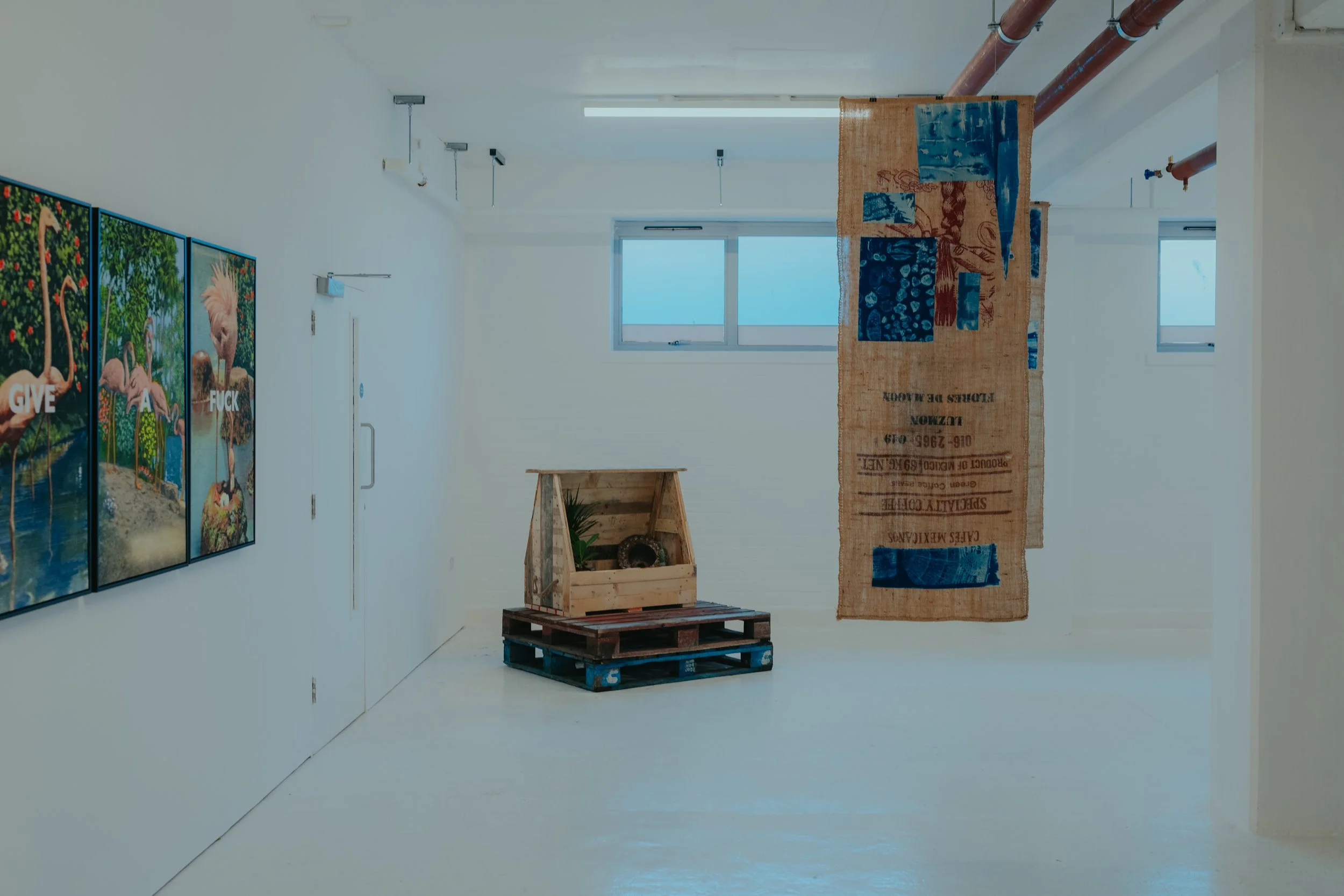
A Still Life in Transit of Pineapple, Cotton, and Breadfruit with Dhuka, Tulips and further Specimens on Velvet. With wall covering: On the Border of my Peaceful Home. 2023
Commissioned by Millennium Gallery, Sheffield for the Dutch Flower Paintings: Exploring Art in Bloom, National Gallery touring exhibition.
Exhibited at Millennium Gallery, Sheffield. St Lukes, Plymouth and in part at Fitzrovia Chapel, London.
Taking influence from research and personal experience of paintings “Fruit and Flowers”, (1798) Paulus Theodorus Van Brussel, Flowers in a Terracotta Vase, (1736-1737) Jan Van Huysum and botanist Sarah Mapps Douglass (1806 –1820).
In amongst the opulence, desire and exoticism the Dutch flower paintings provide, lest we forget the untold stories, the wider stories intertwined in the legacy of these works. The installation explores questions of histories that have been erased, ignored and remain untold, of what is left behind when these specimens are extracted from their native lands. The violence of Horti-pillage and theft in how plants got from one part of the world to another.
Flowers in a Terracotta Vase, was one of the first postcards I bought over 25 years ago, remembering a sense of aspiration, unknowing and inaccessibility my younger self felt, along with a grappling of why this painting? Who was it for? And if this was an exemplary of what I needed to become to be acknowledged as an artist. Fruit and Flowers, specifically the pineapple, much like the tulip, elitist situation where at the height of eighteenth-century mania. Used as a show of exotic wealth and the Coat of Arms on Empire’s colonisations of Caribbean islands formally known as the Leeward Islands.




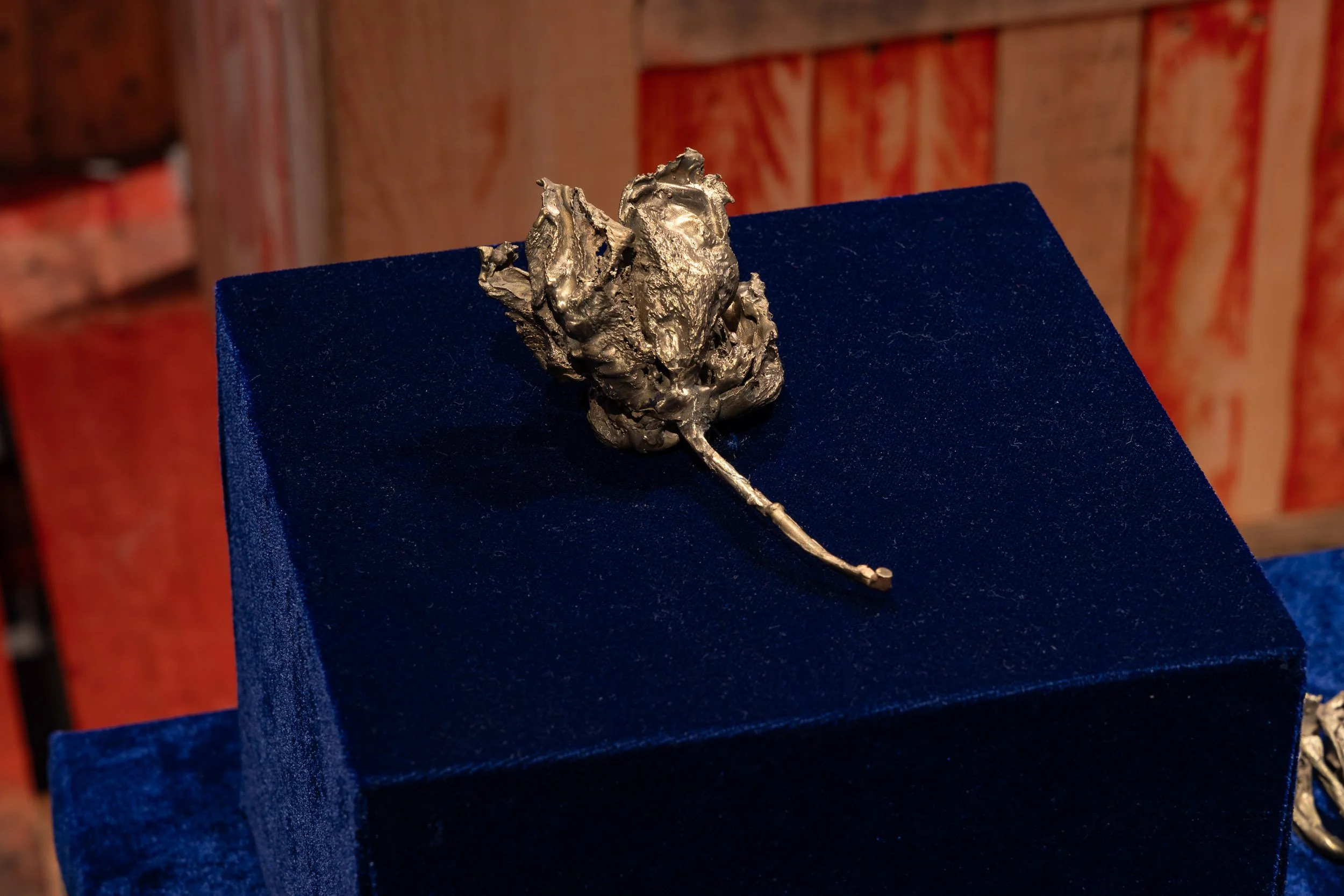

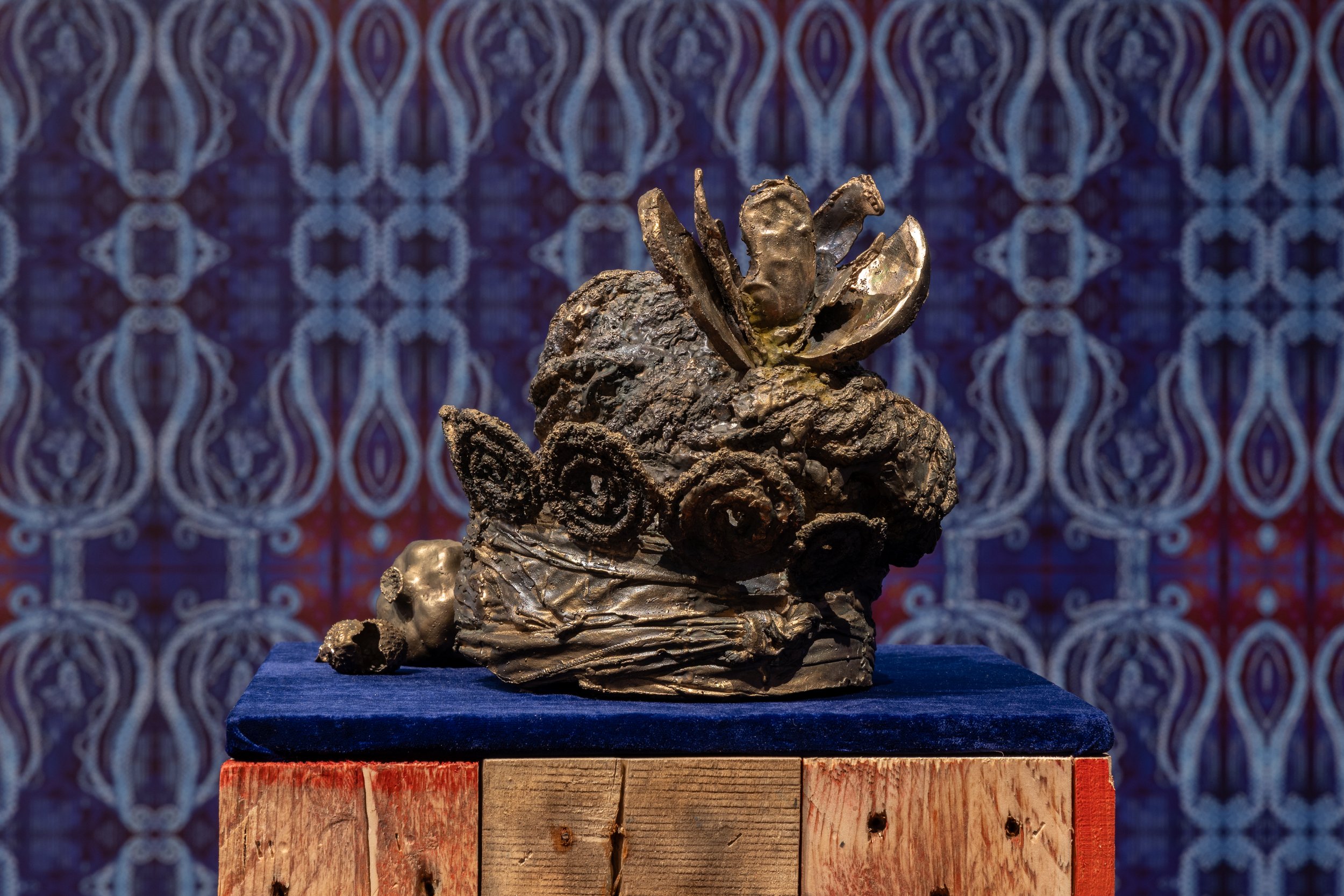


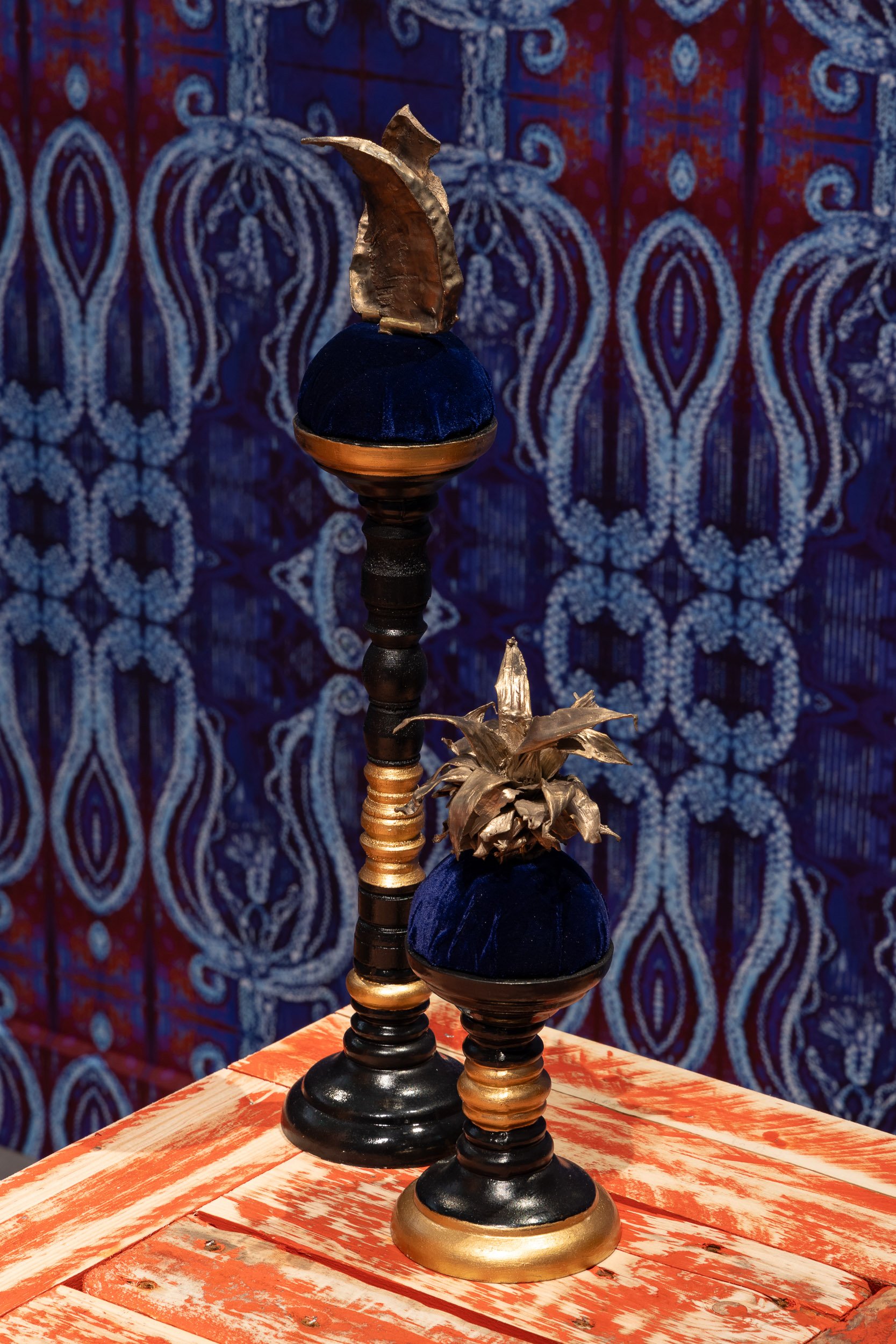


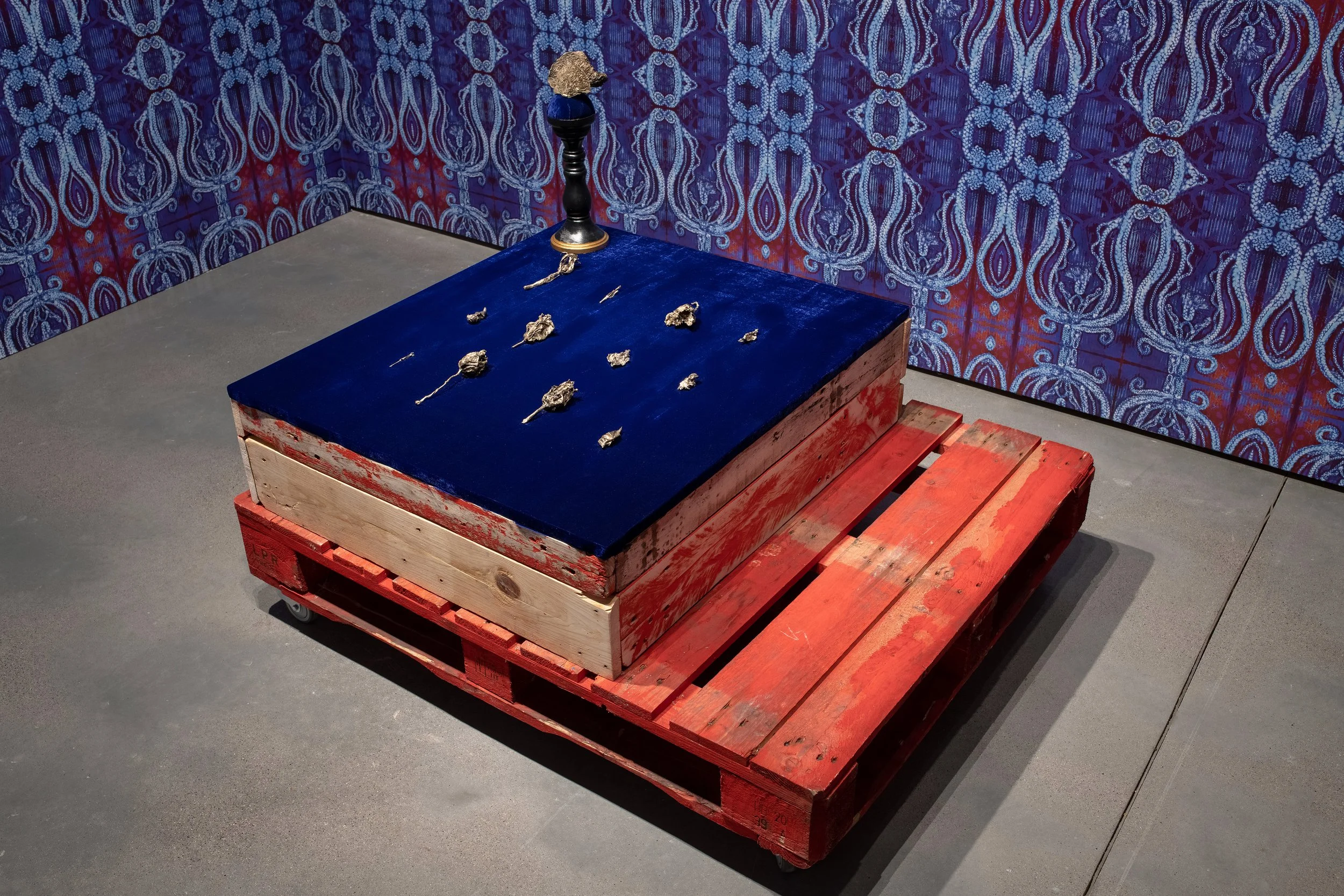


Mi Waan Go a Country Go Look Mango
Commissioned by Bloc Projects, Sheffield UK, Henry Moore Fund, National Lottery funding & Arts Council England.
Exhibited as part of Against Apartheid. Karst, Plymouth and in part at Fitzrovia Chapel, London.
Mi waan go a country go look mango” stems from Coakley’s long-term research of colonial plant life, particularly that of the Caribbean. A series of related works at Sheffield’s Millennium Gallery exhibited concurrently, in response to the Dutch Flower Paintings exhibition on tour from the National Gallery. Both bodies of sculptural work investigate the intricacies of colonisation and Black identity. “Mi waan go a country go look mango” consists of the body of research which has informed the Horticultural Appropriation and Dutch Flowers projects, providing a space to open-up accesibility, allowing the viewer to map and make their associations through the information and works.
As plant specimens were removed from their tropical surroundings, so too were their associated knowledges. Mi waan go a country go look mango, taken from Jean ‘Binta’ Breeze’s dub poem ‘Riddym Ravings’, attempts to reassemble some of these knowledges on the one hand while challenging Eurocentric categorisations and archiving conventions on the other.
The project is a collective effort that brings into the fold new elements and collaboration with Otis Mensah, with a new spoken word piece. Together, the range of processes unpick the charged narratives of horticultural lives by asking ‘how, as Black people, do we relate to [our] landscape when Empire and Colonisation are so closely linked with the land we now live in?’
A Living and Healed Peoples collaboration With Otis Mensah.

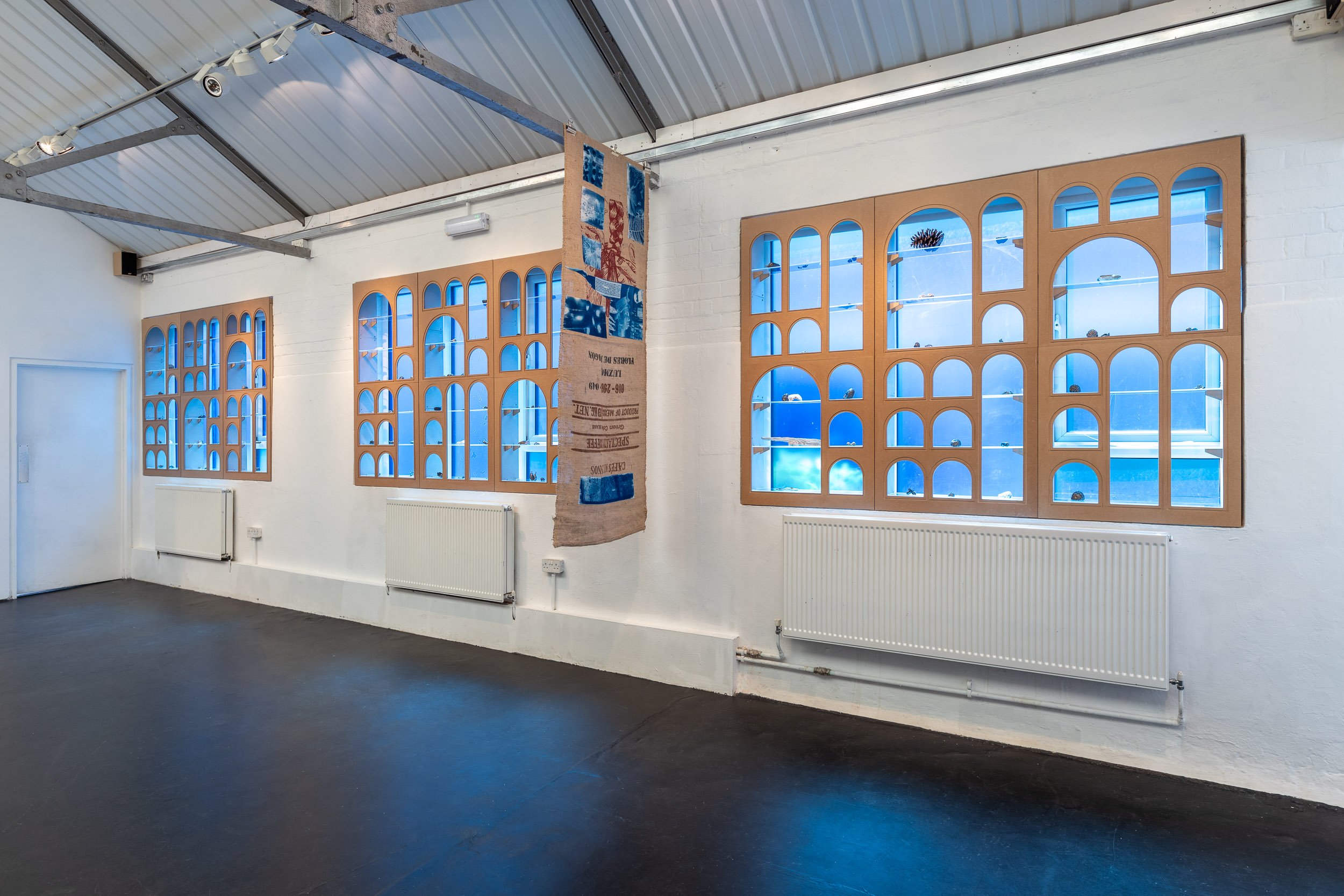

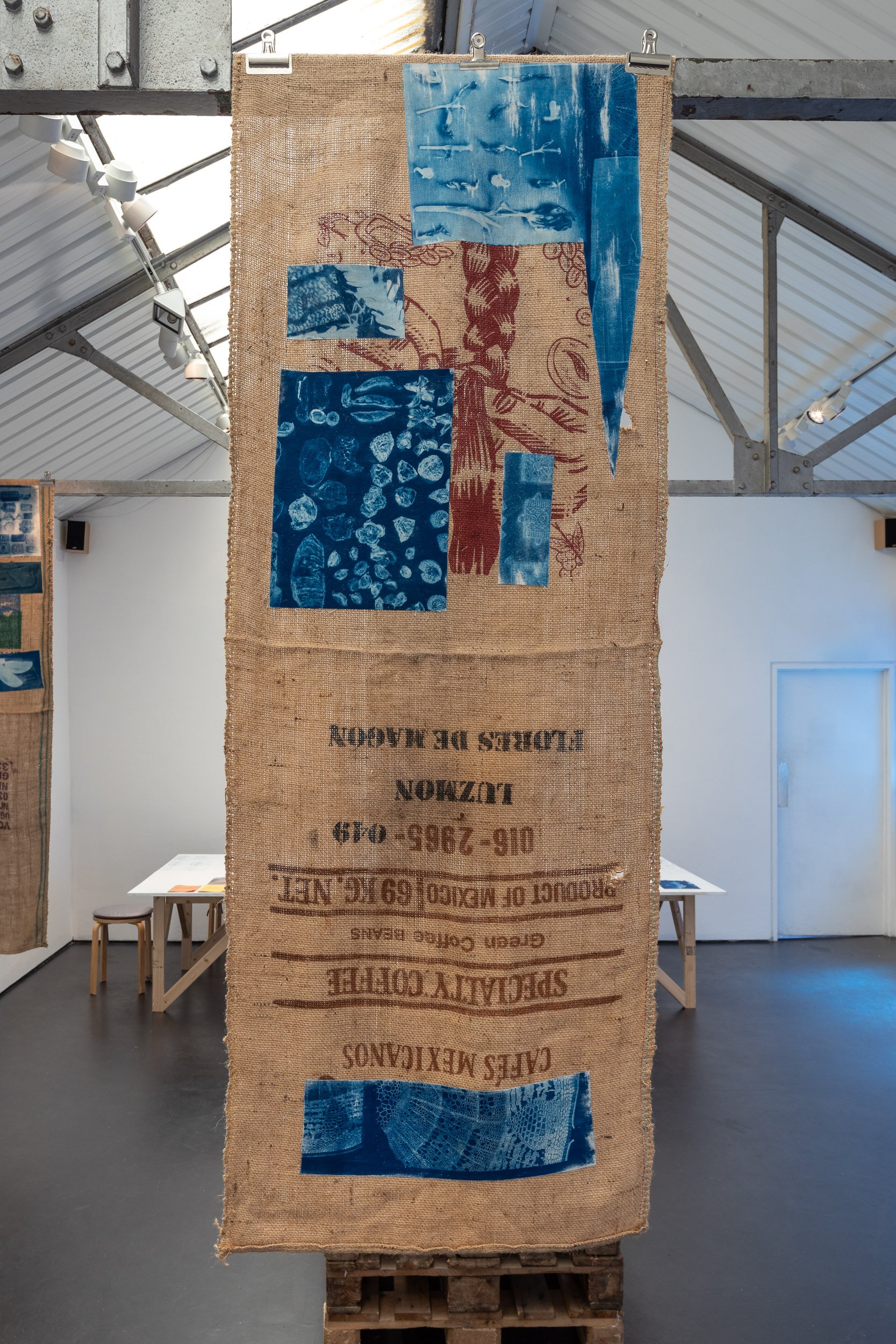
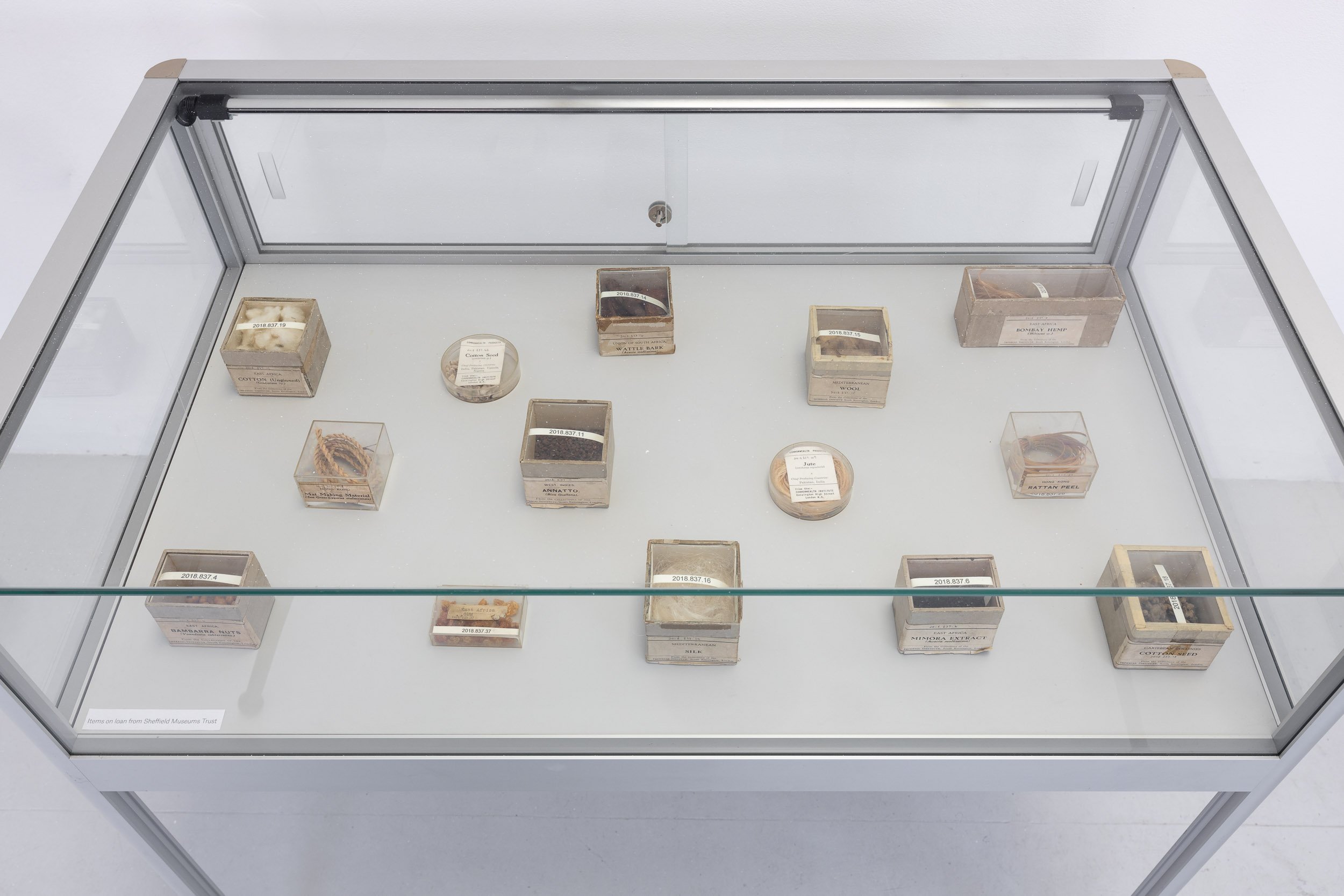


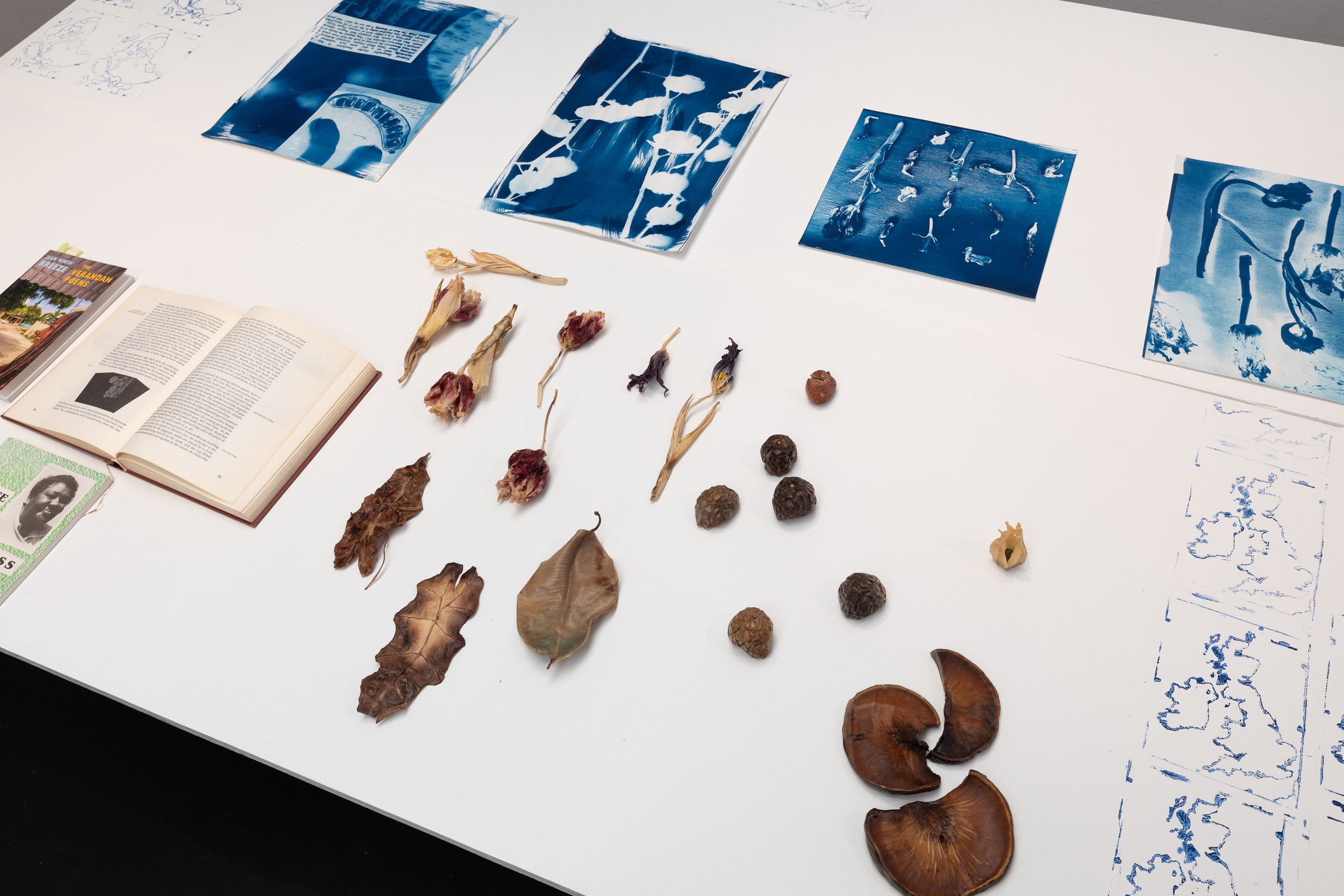
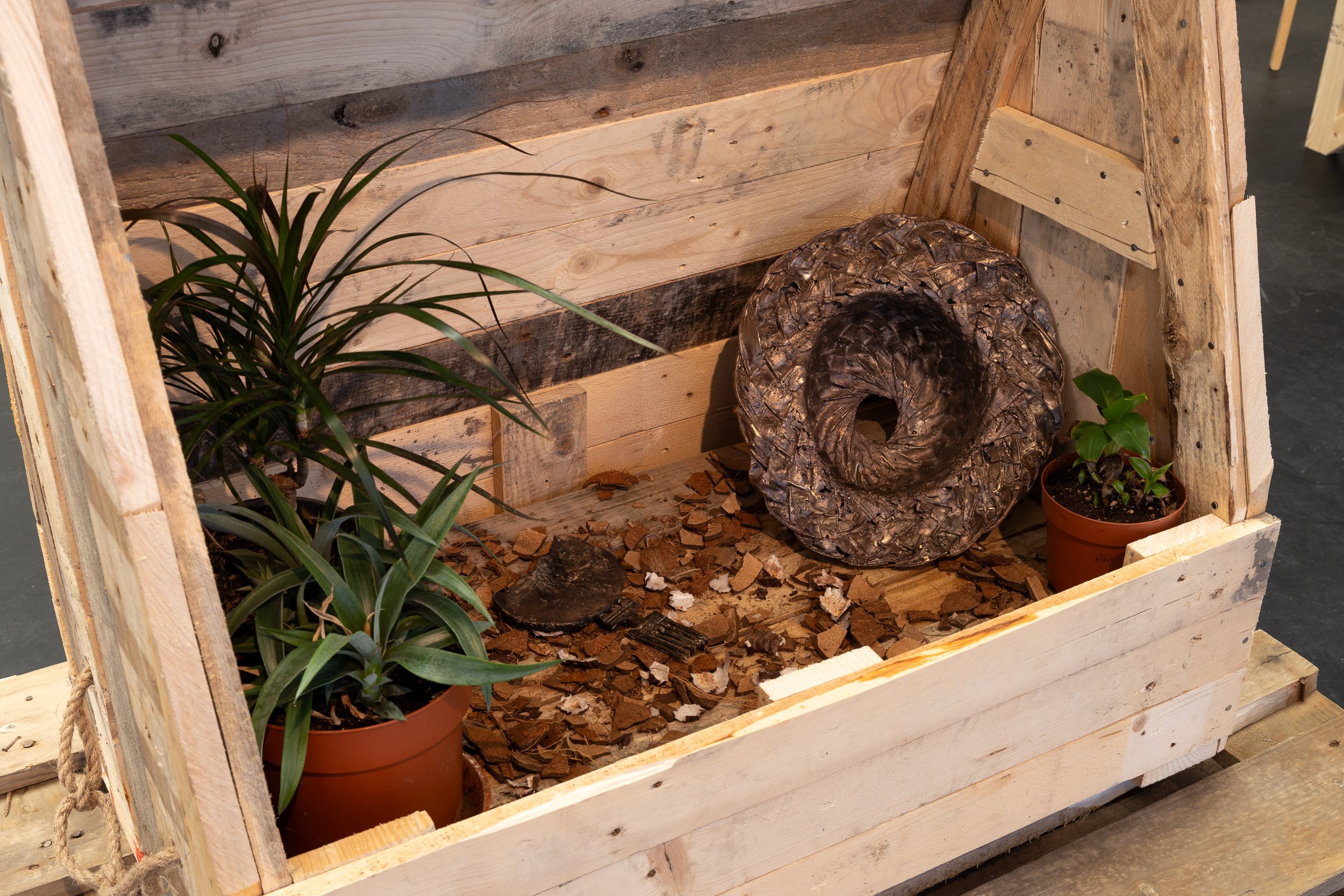
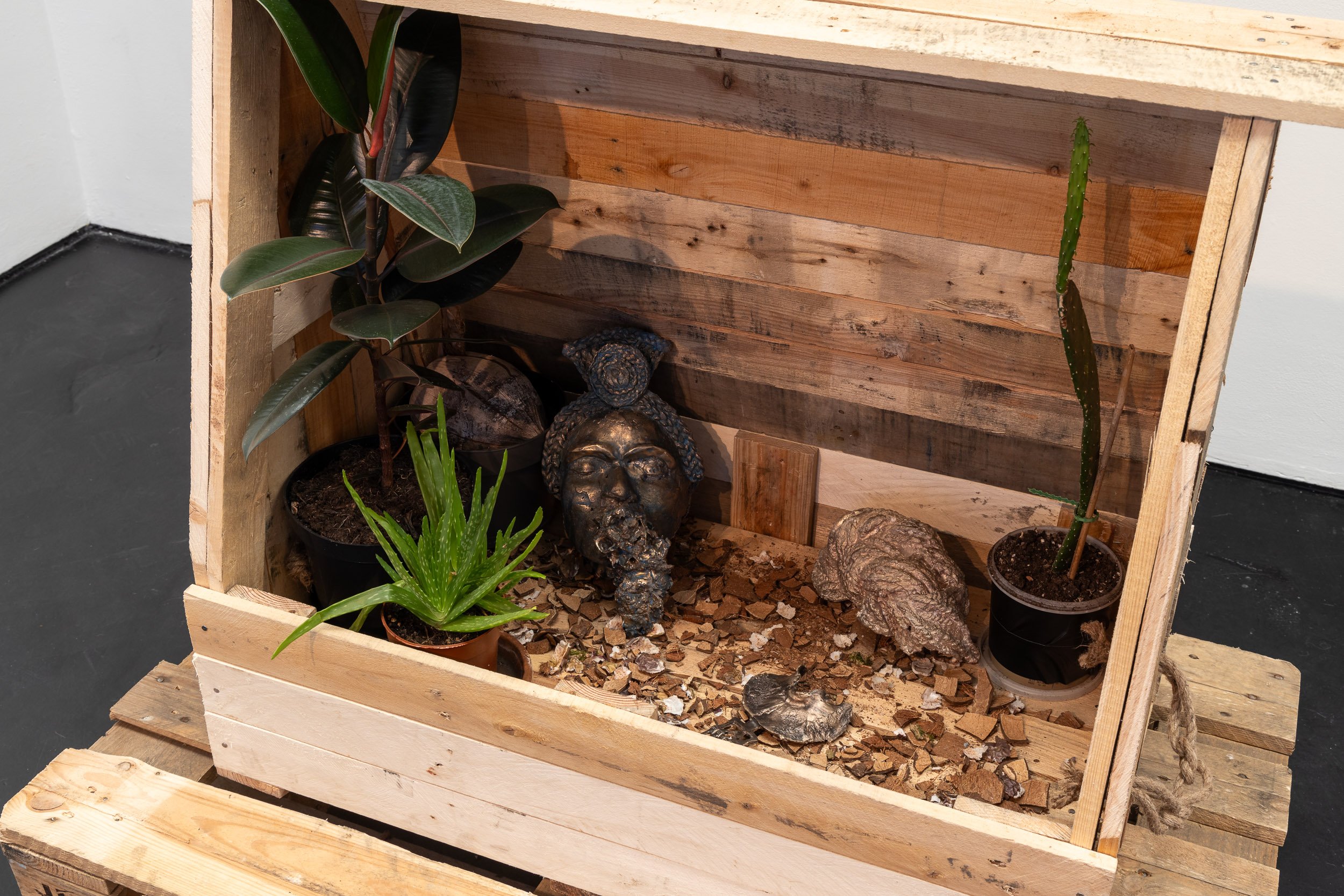


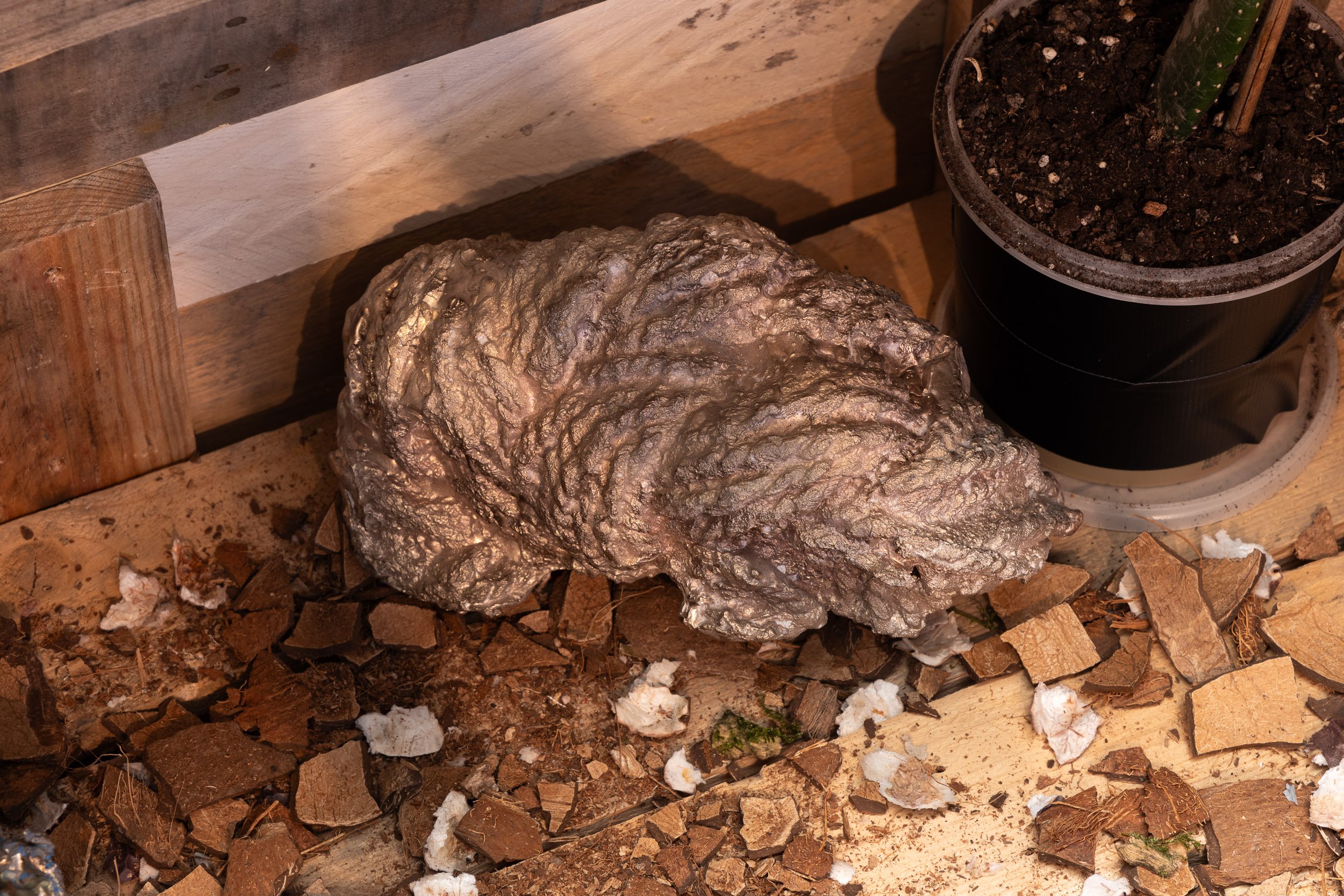


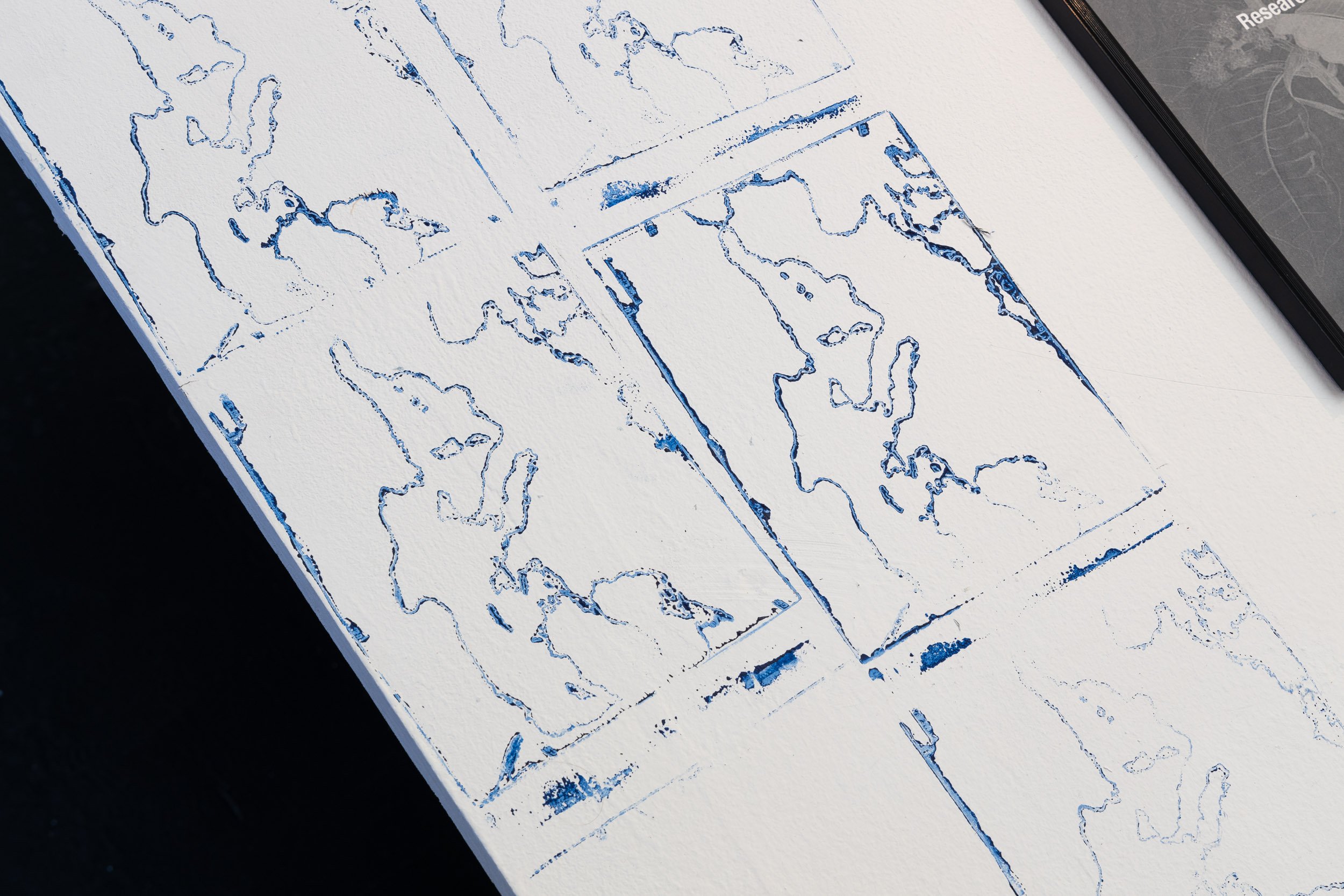

Horticultural Appropriation: Settlement & Ritual: Passion
Dark Echoes exhibition for Platform 22 a Freelands Foundation artist development programme overseen by Site Gallery, Sheffield.
Exhibited at Site Gallery, Sheffield, uk
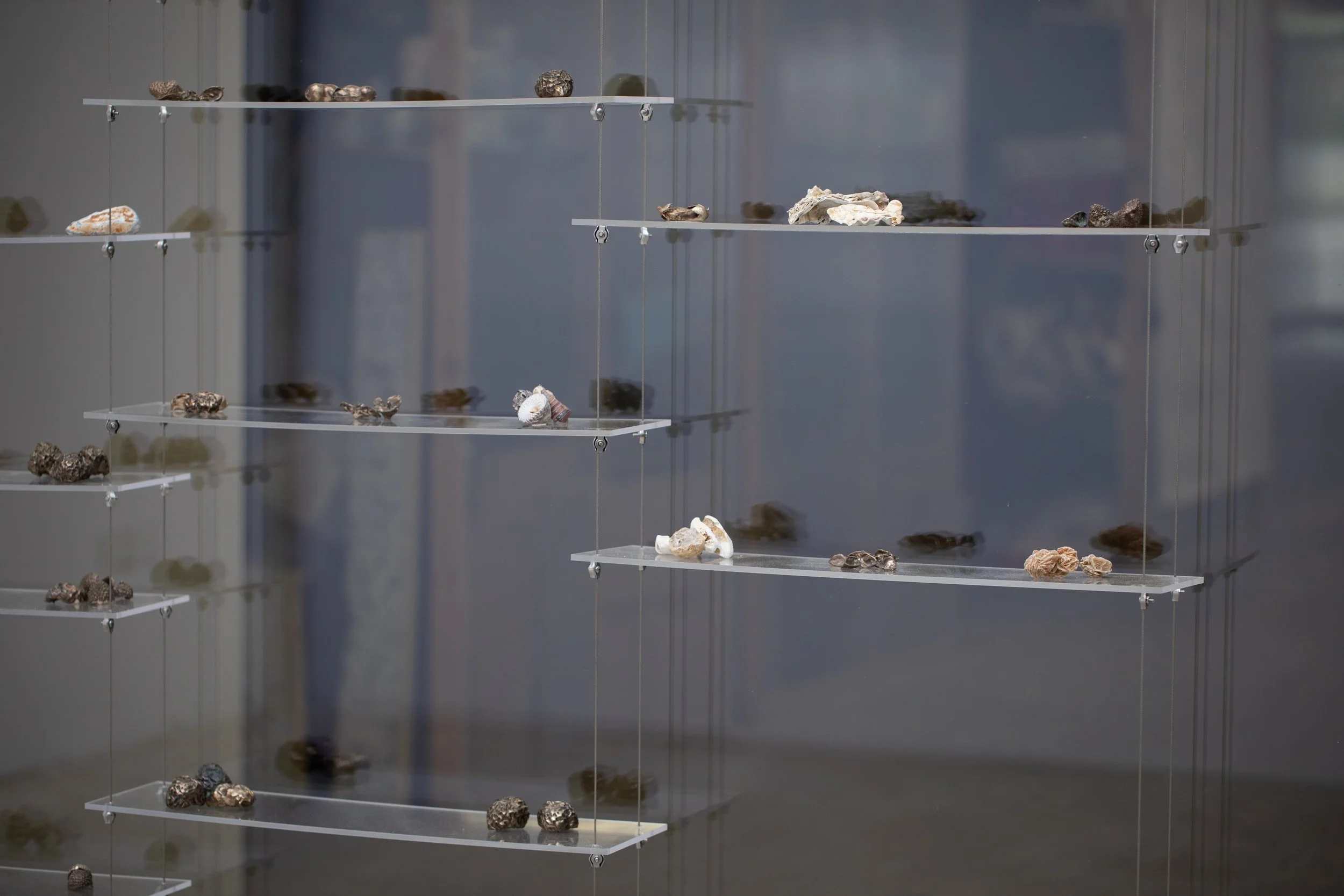
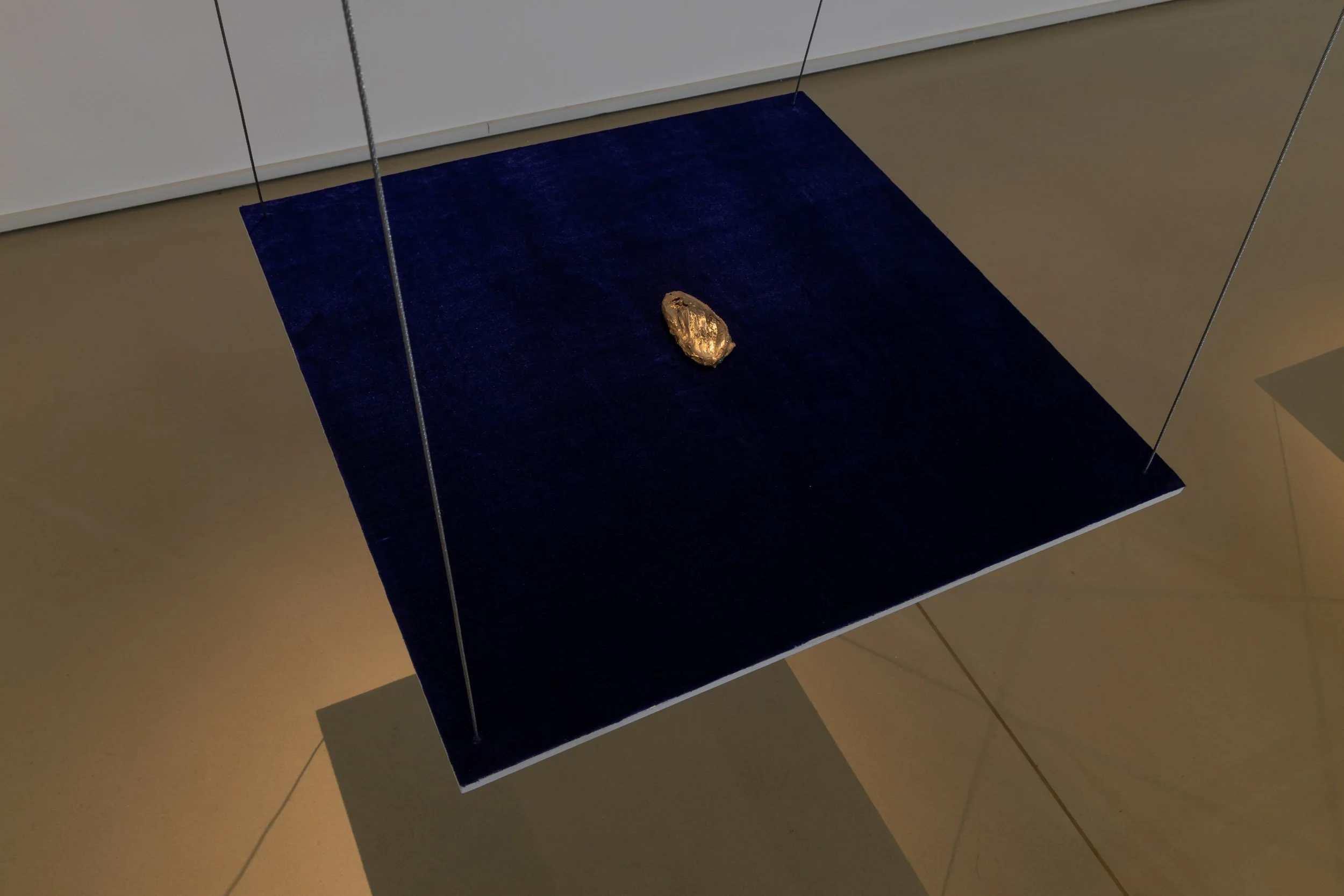
This sequence Horticultural Appropriation: Settlement, 2022-23 and Ritual, Passion, 2022 explore, through its curation the journey botanical specimens undertook and how they are later categorized. All these journeys are connected, the roots were botanical specimens, cotton and people were transported back and forth. They were all part of a system of imperialism and exploitation, extracting from altering and disseminating colonised landscapes, ecosystems and the people who lived within them.
Declared discoveries and renamed them and in doing so erase their identities and histories while appropriating indigenous knowledges and capitalising on it for their own gain. My hope is to decolonise these specimens, knowledges, and stories around them, challenging how we are permitted to engage/access and therefore unpick the narratives around them.
Exhibition text Breadfruit ___ Lungs by Salena Barry




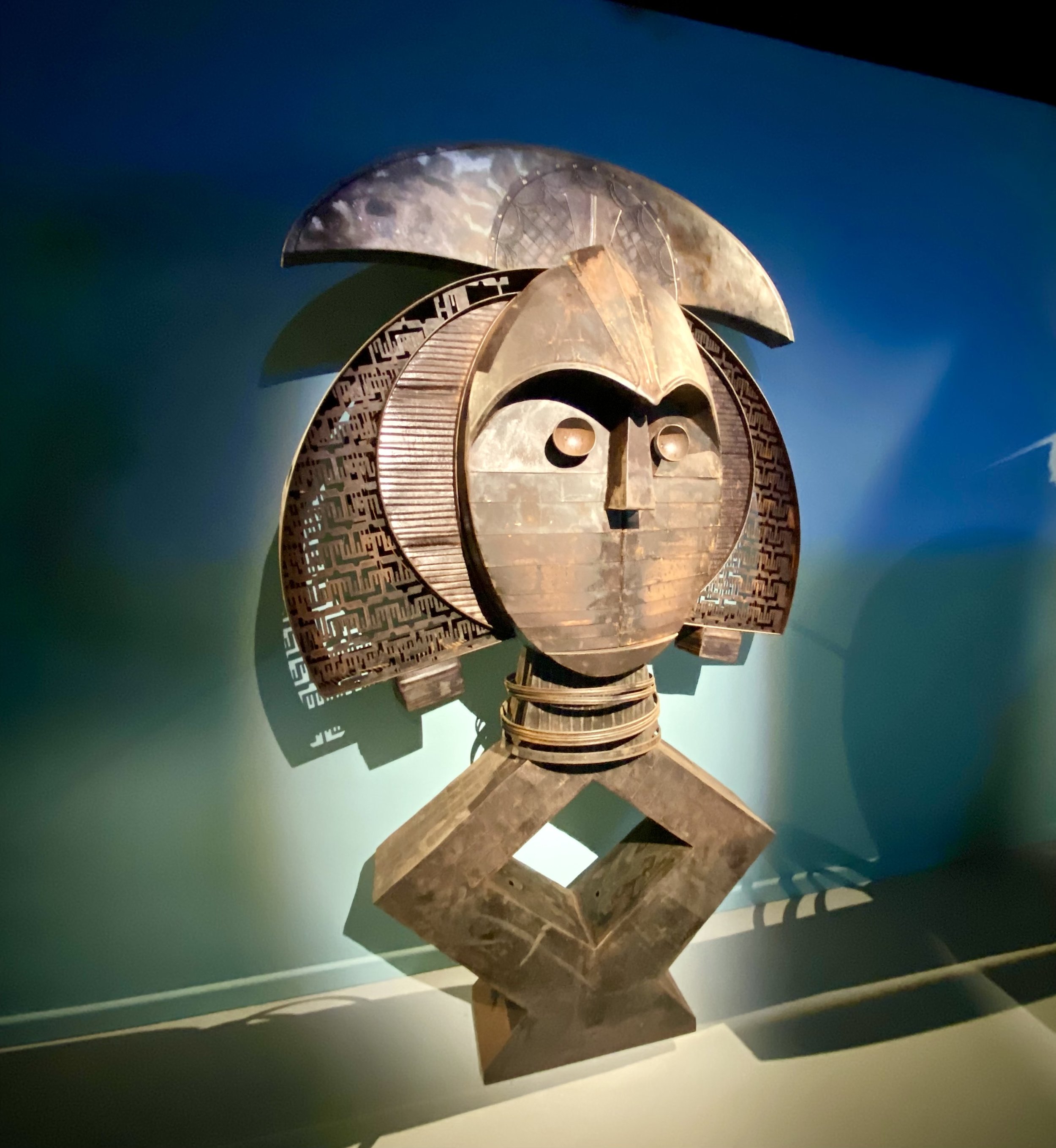
Mbulu Ngulu, 2022
Commissioned for Eden Project, Cornwall & BBC
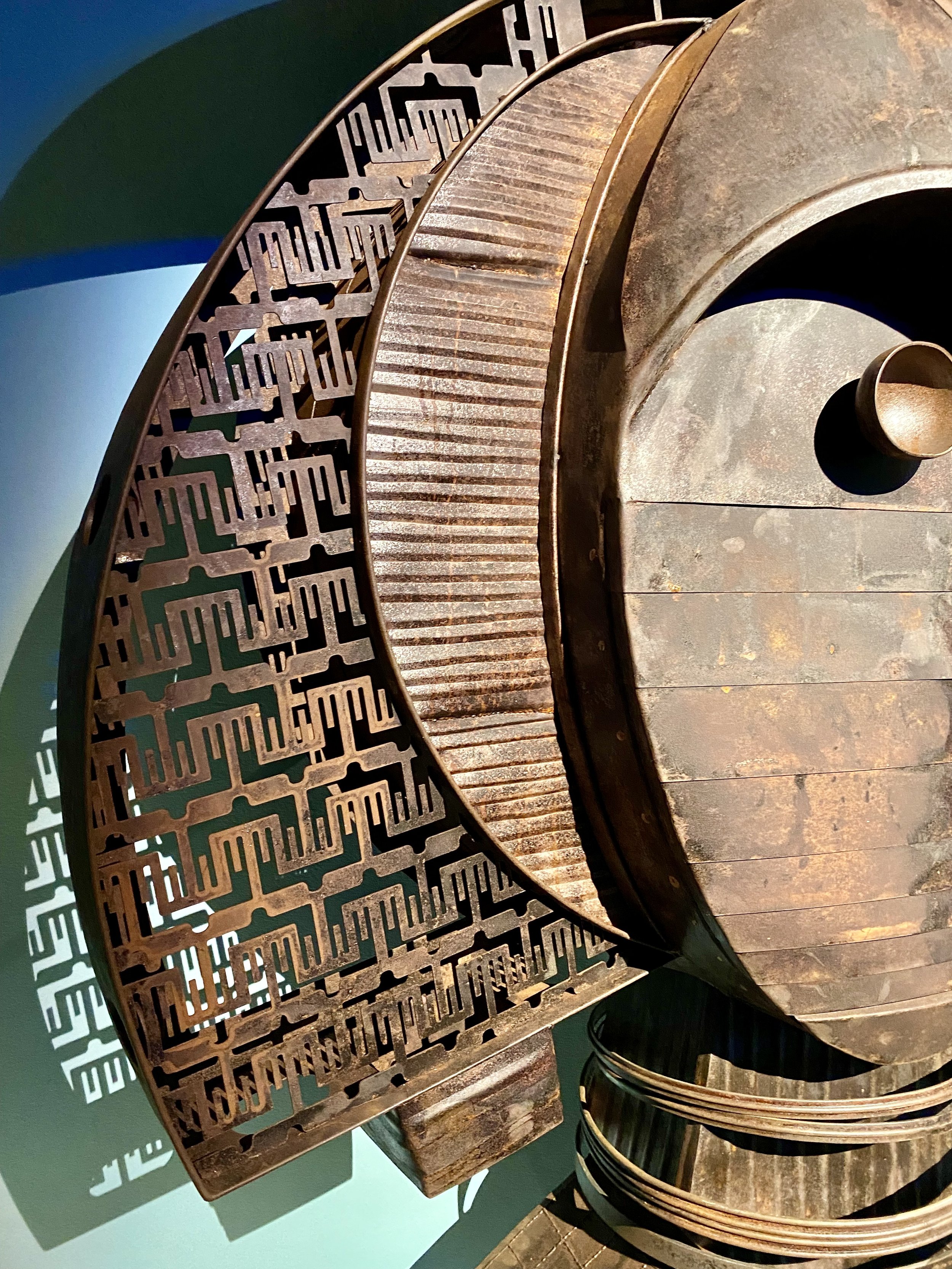
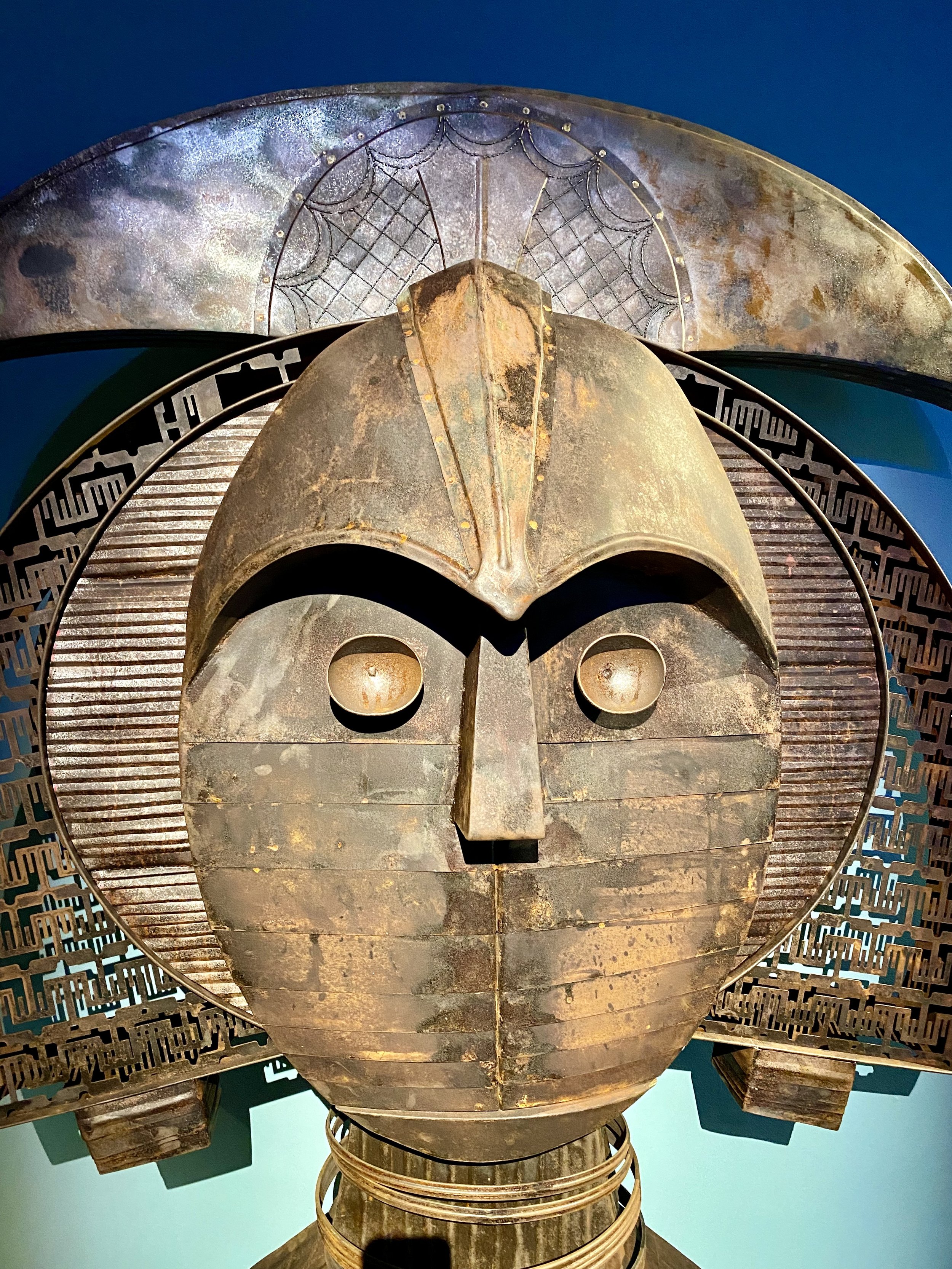
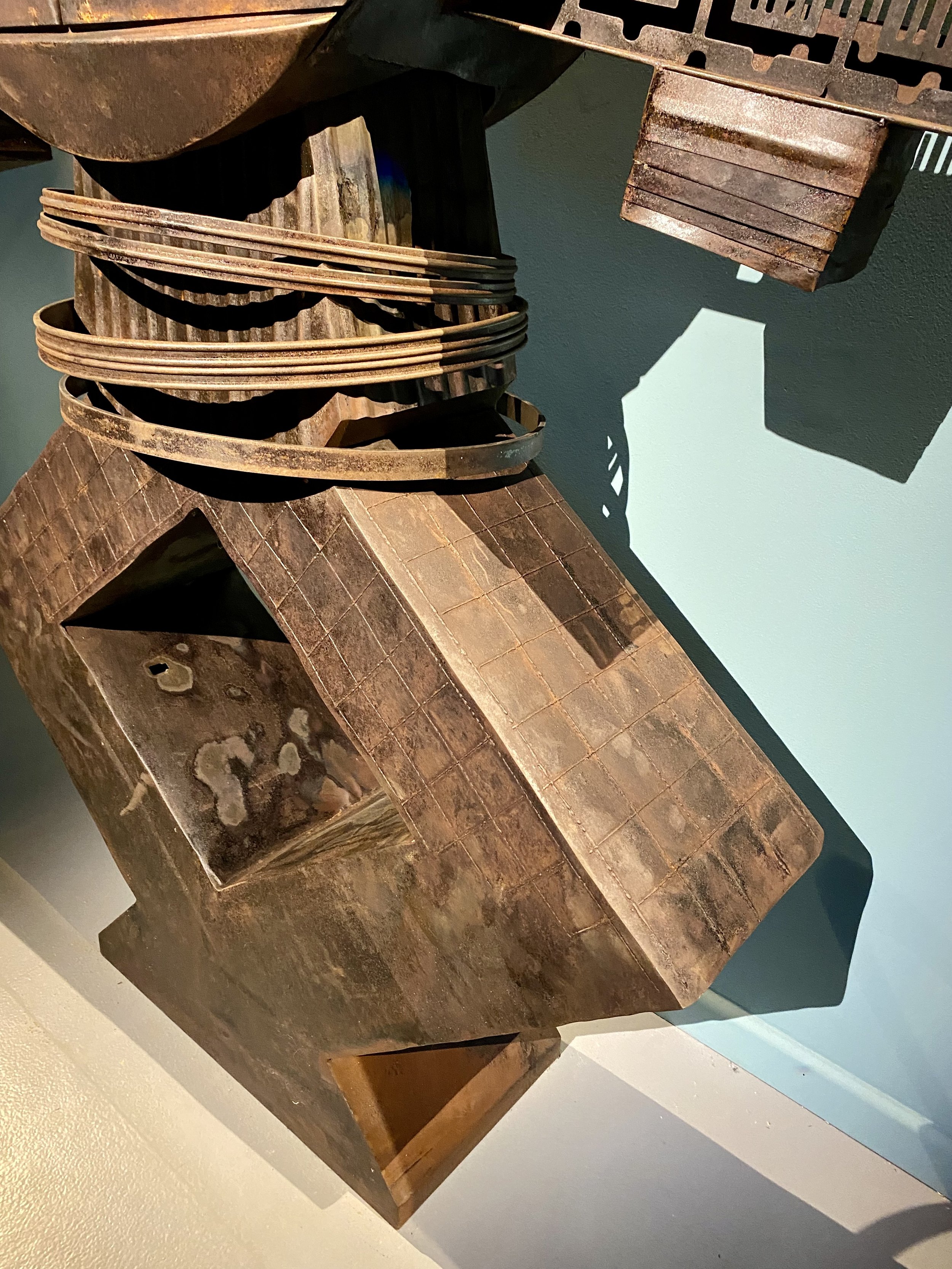
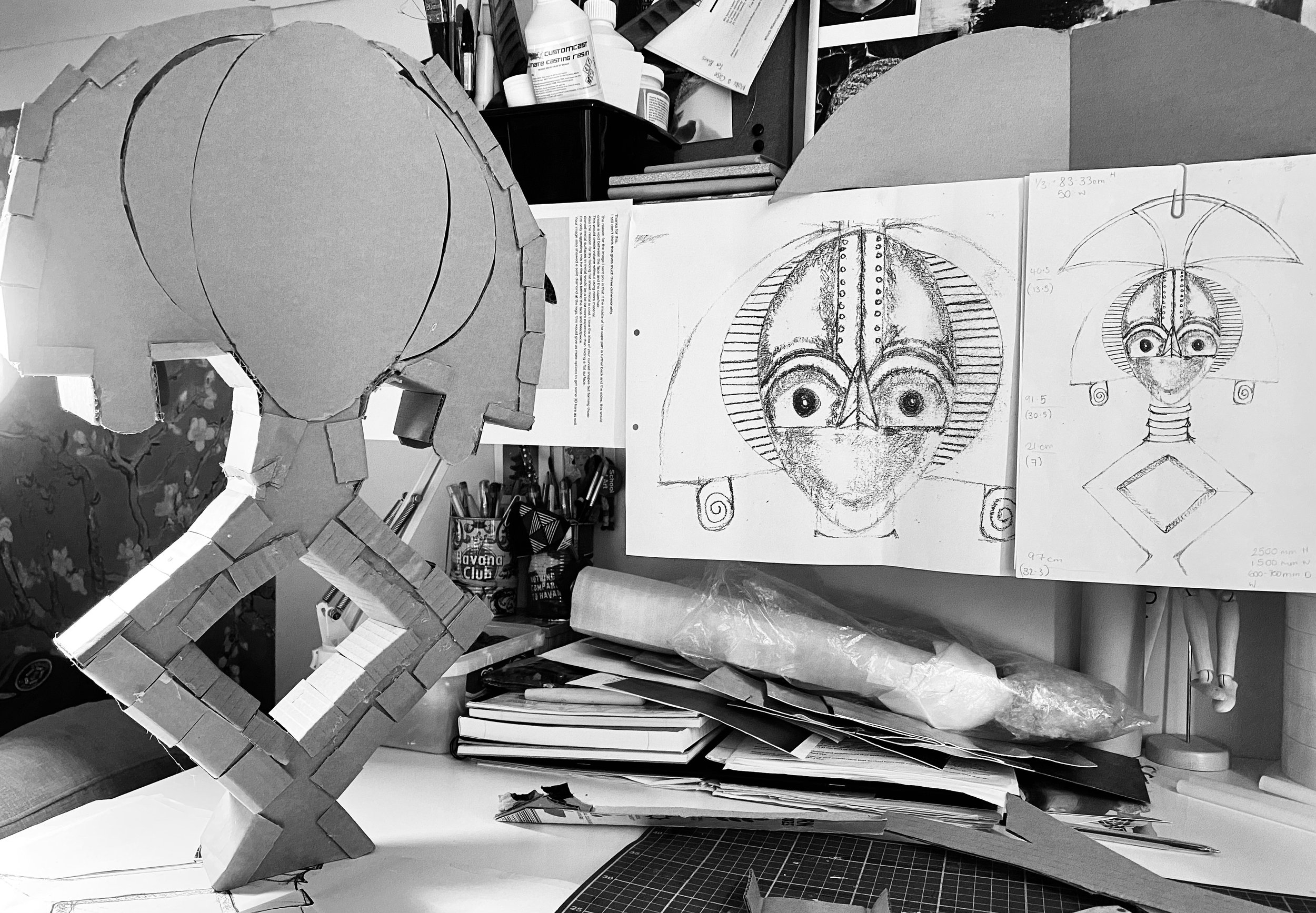
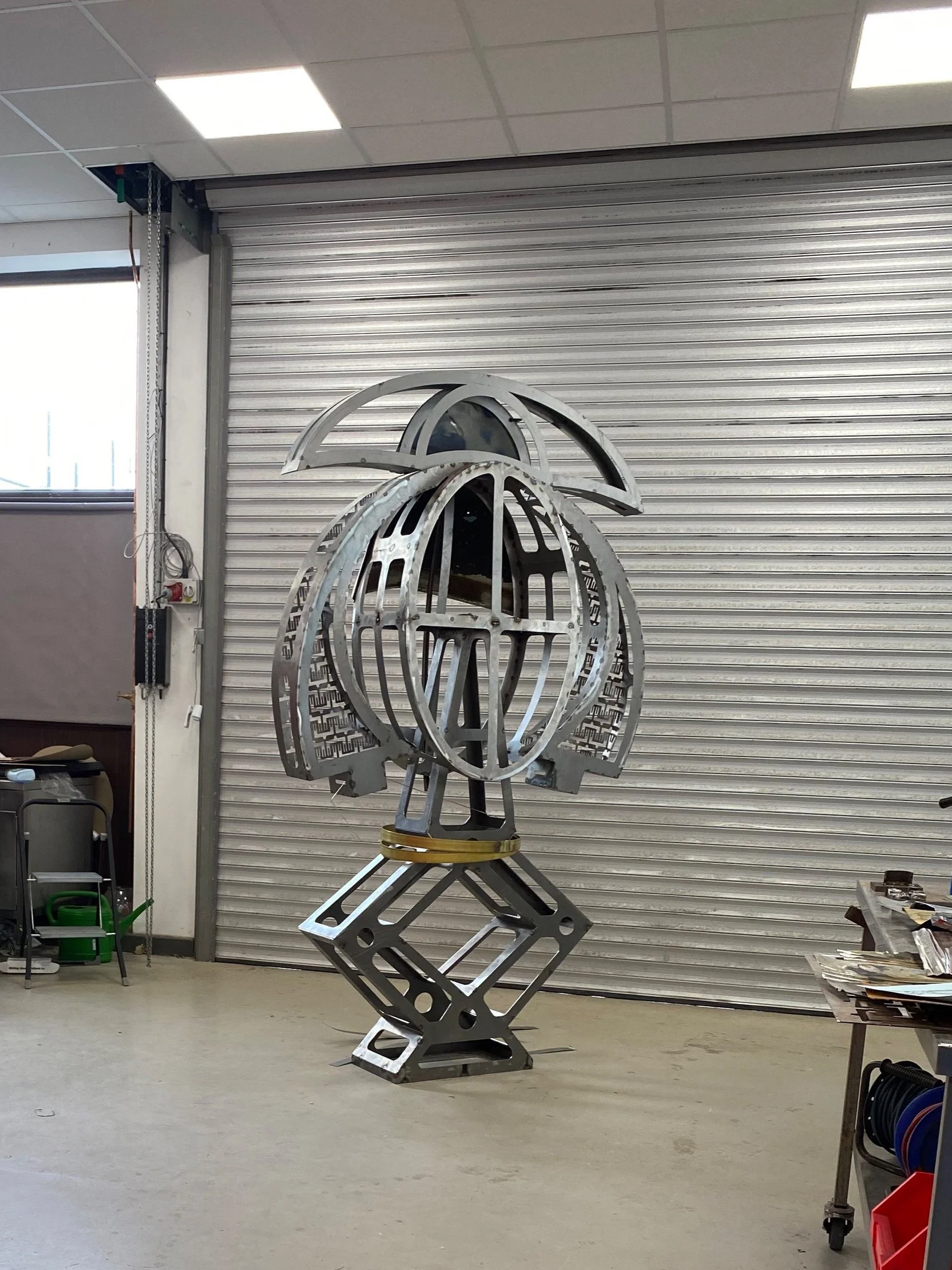
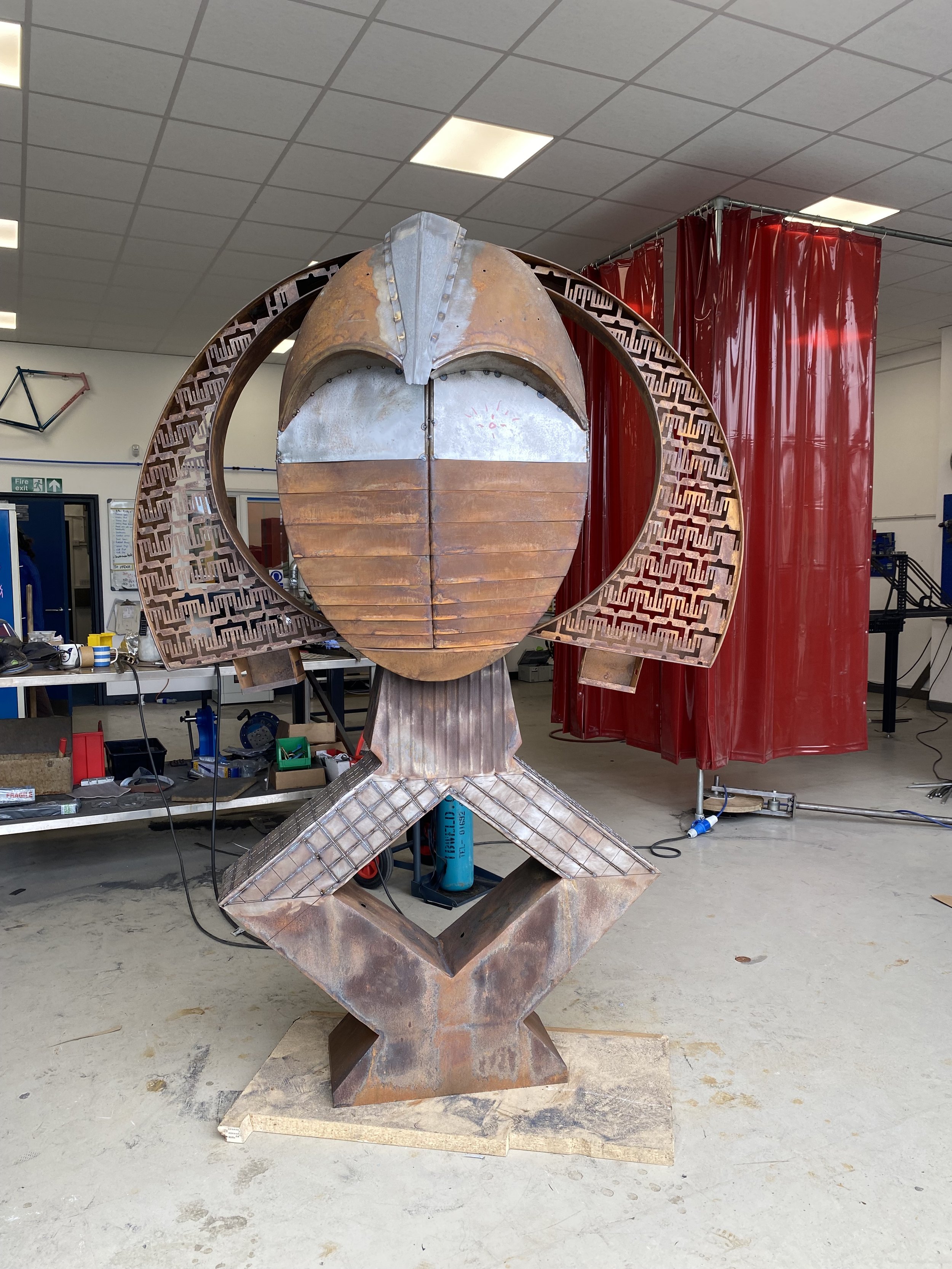
Horticultural Appropriation 2022.
Exhibited in Super Natural exhibition at Eden Project, Cornwall and On Gathering at S1 Gallery, Sheffield, UK